Uncategorized

How Long Does a Split AC Usually Last in Dubai
Uncategorized

How Long Does a Split AC Usually Last in Dubai?

How Long Does a Split AC Usually Last in Dubai? Home Blog How Long Does a Split AC Usually Last in Dubai? A split AC in Dubai usually lasts around 10 to 15 years, but the actual lifespan can vary. Dubai’s extreme heat, dust, humidity, and long cooling hours can put more strain on an air conditioner than milder climates. A well-installed and regularly maintained unit can stay reliable for many years, while heavy use and poor maintenance may shorten its working life. The condition of the AC matters just as much as its age. Frequent repairs, weak cooling, unusual noises, rising energy bills, or repeated refrigerant problems can indicate that a unit is nearing the end of its service life. Why Split ACs Wear Out Faster in Dubai Dubai split ACs often work 10 to 16 or more hours a day for much of the year, unlike systems in milder climates that may only run heavily during a short cooling season. Constant operation means more hours of compressor, fan, and coil use. Extreme summer temperatures add further strain, while Dubai’s dust and sand can restrict airflow and build up on coils and outdoor components. As a result, the effective wear on a split AC can be greater than its calendar age alone suggests. What Affects How Long a Split AC Lasts A split AC’s working life depends on more than its age. In Dubai, daily usage, installation, maintenance, outdoor conditions, and equipment quality can all affect how long the system performs reliably. Daily running hours: A unit running 10–16 or more hours a day experiences more compressor, fan, and component wear than one used occasionally. Installation and sizing: Correct sizing and professional installation help prevent excessive workload, poor airflow, refrigerant issues, and unnecessary strain on the system. Maintenance and filter cleaning: Regular AC servicing and clean filters help maintain airflow, cooling efficiency, and proper operation while reducing avoidable wear. Outdoor conditions: Dust, sand, and direct sunlight can increase heat buildup and contamination around the outdoor unit, affecting coils and other components. Brand and build quality: The quality of the compressor, coils, electrical parts, and overall construction can influence durability and long-term performance. Signs Your Split AC Is Nearing the End of Its Life An aging split AC does not always fail suddenly. Changes in cooling, energy use, repairs, sounds, smells, and starting behavior can reveal that the system may need closer inspection. Weaker cooling: The AC takes longer to cool the room or no longer reaches the same temperature despite normal settings. Higher electricity bills: Energy costs increase without a clear change in usage, which can indicate declining cooling efficiency. Frequent repairs: Repeated breakdowns or increasingly frequent repairs may suggest that several components are reaching the end of their service life. Strange noises or smells: Grinding, buzzing, rattling, or unusual odors can point to problems with the fan, motor, electrical parts, coils, or other components. Starting or shutdown problems: An older system may struggle to turn on, stop unexpectedly, or switch off and restart without an obvious reason. Split AC Lifespan at a Glance Factor Typical Impact on Lifespan Milder climate with seasonal use 15–20 years can be typical with proper care Dubai’s heavy daily use 7–10 years of strong performance can be more realistic under heavy use Regular professional maintenance Can meaningfully extend reliable service life Neglected maintenance Can significantly shorten service life and increase breakdowns Poor installation or incorrect sizing Can shorten lifespan from the start by increasing system strain Can a Split AC Last 20 Years in Dubai? Yes, but it is possible rather than typical in Dubai. Reaching 20 years would usually require lighter-than-average use, excellent installation, correct sizing, and consistent professional maintenance from the beginning. Even then, a system still operating after 15 years may not have all its original components. Major parts such as the compressor, coils, or other electrical components may have been replaced during its service life. Is It Normal for an AC to Run 20 Hours a Day in Dubai? Yes, running an AC for 20 hours a day can be common during Dubai’s peak summer, when outdoor temperatures and cooling demand are extremely high. However, nearly continuous operation just to maintain a normal indoor temperature deserves attention. It can point to poor efficiency, incorrect AC sizing, restricted airflow, or an aging system that is working harder than it should. A professional inspection can help identify the actual cause. What Is the Most Common Problem in Split ACs? A dirty or clogged air filter is one of the most common problems affecting split AC units because it restricts normal airflow through the system. If left unaddressed, the reduced airflow can cause weaker cooling, coil icing, and higher energy consumption as the AC works harder to maintain the set temperature. The good news is that this is also one of the easiest problems to prevent with regular filter cleaning. How to Help Your Split AC Last Longer Clean Filters Monthly: During heavy Dubai use, clean or replace the air filters about once a month to maintain airflow and reduce strain on the system. Service Every Six Months: Schedule professional AC servicing every six months to catch refrigerant, coil, drainage, electrical, and airflow issues early. Keep Outdoors Clear: Remove dust, sand, leaves, and other debris around the outdoor unit so it can release heat and operate efficiently. Set Sensible Temperatures: Avoid unnecessarily low thermostat settings, which can make the AC work harder and increase operating stress and energy use. Fix Small Issues Early: Address weak cooling, unusual noises, water leaks, or airflow changes before a minor fault develops into a costly repair. Why Choose Bluebix Technical Services for Split AC Care in Dubai Bluebix Technical Services provides practical split AC care focused on reliable cooling, sensible maintenance, and solutions suited to Dubai’s demanding climate. Experienced Technicians: Our trained and experienced technicians inspect the system properly, identify the underlying issue, and recommend the appropriate repair or maintenance. Dubai-Focused Maintenance: Our maintenance plans
How Much Does AC Repair Cost in Dubai
Uncategorized

How Much Does AC Repair Cost in Dubai?

How Much Does AC Repair Cost in Dubai? Home Blog How Much Does AC Repair Cost in Dubai? AC repair pricing in Dubai can vary widely, making it difficult to know what a fair price actually looks like. A simple inspection may cost much less than a repair involving a compressor, fan motor, capacitor, thermostat, or refrigerant leak. The type of AC, the fault, and the parts required can all affect the final amount. For common AC problems, the total cost usually depends on the repair itself, labor, diagnosis, spare parts, and whether the service is urgent. Understanding these costs can help you compare quotes and avoid unexpected charges. How AC Repair Pricing Works in Dubai AC repair pricing in Dubai usually depends on three main costs: the technician’s visit, the labor required, and any replacement parts or materials needed. The Callout Fee A basic AC diagnostic or callout fee in Dubai typically ranges from AED 100 to AED 250. This usually covers the technician’s visit, initial inspection, and basic fault assessment. The technician may check cooling performance, airflow, electrical components, refrigerant levels, or visible leaks before identifying the likely cause. Some AC repair companies, including BlueBix Technical Services, may waive the diagnostic fee when you proceed with the recommended repair. Labor Charges AC repair labor in Dubai typically costs around AED 100 to AED 250 per hour, depending on the fault, repair complexity, AC system, and time required. A simple capacitor or thermostat replacement may take less time than compressor, electrical, or refrigerant-related work. Some companies also use a flat labor rate for common, predictable repairs, making the final AC service price easier to estimate before work begins. Spare Parts and Materials Replacement parts add to the total AC repair cost when a faulty component cannot be repaired. The price depends on the specific part, AC brand and model, whether an original or compatible component is used, and its availability in Dubai. Common examples include capacitors, fan motors, thermostats, compressors, control boards, and refrigerant. A professional technician should identify the failed component and explain the parts cost before replacement. Average AC Repair Cost by Type of Repair The total cost of AC repair in Dubai depends on the fault, replacement parts, system type, and repair complexity. The ranges below provide a practical estimate for common AC problems. Repair Type Estimated Cost (AED) General inspection / callout fee AED 100–250 Minor repair, such as a capacitor AED 100–500 AC gas / refrigerant refill AED 250–500 Water leak repair AED 200–400 Thermostat replacement AED 200–400 Fan motor repair / replacement AED 350–600 Compressor replacement AED 600–1,200+ Complex or major system repair AED 1,500–5,000+ These are estimated price ranges, not fixed quotations. The final AC repair price can vary based on the AC brand and model, parts availability, accessibility, labor time, and the extent of the fault. Does the AC Type Affect Repair Cost? Yes, the type of AC can affect the repair price in Dubai. Window AC repairs are generally less expensive, typically around AED 150–400, because the system uses a simpler single-unit design. Split AC repairs often cost more, around AED 250–800 or higher, as they involve separate indoor and outdoor units, refrigerant lines, electrical connections, and more complex components. What Affects the Final AC Repair Cost? The final AC repair cost in Dubai can vary even when two customers have similar cooling problems. The technician’s diagnosis, AC condition, required parts, and service timing all influence the amount you may pay. Repair complexity: A simple adjustment or minor component repair usually costs less than a major compressor, electrical, or control-system failure. AC age and brand: Older units or less common brands may require specialized components or harder-to-find replacement parts. Service urgency: Same-day, emergency, or after-hours AC repair may carry higher labor or callout charges. Spare parts availability: If a capacitor, fan motor, thermostat, compressor, or other component needs to be sourced, its price and availability can increase the total. Second technician visit: If a required part is not immediately available, a follow-up visit may be needed after the replacement component arrives, adding additional labor or service charges. Emergency and After-Hours AC Repair Costs Emergency, weekend, and after-hours AC repair in Dubai may cost more than standard appointments, with surcharges often reaching 50–100% above regular rates. The exact increase depends on the service provider, repair timing, and urgency. Before booking an emergency AC technician, confirm the callout fee, labor rate, and any after-hours surcharge upfront. This is especially important during Dubai’s peak summer demand, when technician availability can be limited. Are AC Repairs Covered by Warranty? Many reputable AC repair companies in Dubai provide a workmanship guarantee, commonly covering repairs for around 30 to 90 days. A separate parts warranty may also apply, often lasting 3 to 12 months, depending on the component and manufacturer. Warranty coverage can differ between providers, so ask what is covered, how long it lasts, and whether replacement parts have separate terms before approving the AC repair. How to Get an Accurate AC Repair Quote Before approving an AC repair in Dubai, ask a few simple questions to understand exactly what you are paying for. A clear quotation helps you compare services and avoid unexpected charges. Break Down Costs: Ask for separate amounts for the callout or diagnostic fee, labor, spare parts, and any additional materials. Confirm VAT: Check whether the quoted AC repair price includes VAT or if it will be added to the final invoice. Check Warranty Terms: Ask how long the workmanship and replacement parts are covered before agreeing to the repair. Compare Larger Repairs: For expensive compressor or major system repairs, consider getting quotes from more than one AC service provider. Request It in Writing: Be cautious if a provider refuses to give a written estimate or clearly explain the expected repair cost. How to Reduce Your AC Repair Costs A few simple maintenance habits can help reduce unexpected AC repair bills in Dubai. Regular attention also helps your cooling system

Why Is My Split AC Leaking Water
Uncategorized

Why Is My Split AC Leaking Water? Causes and Solutions

Why Is My Split AC Leaking Water? Causes and Solutions Home Blog Why Is My Split AC Leaking Water Water pooling under or around a split AC usually means something is wrong with its drainage, airflow, installation, or internal parts. A clogged condensate drain, dirty filter, frozen evaporator coil, damaged drain pan, or low refrigerant can all cause water to leak from the indoor unit. The first thing to check is where the water is coming from, as the leak location can point to the underlying problem. Water leaking from the indoor unit, drain pipe, front panel, or underneath the AC can have different causes. A blocked condensate drain may cause water to back up, while a dirty filter or low refrigerant can lead to a frozen evaporator coil and excess water when the ice melts. Improper installation, a damaged drain pan, and poor drainage can also cause recurring leaks. Important First Step: Cooling Mode vs. Heat Mode Before troubleshooting a leaking split AC, check which mode it is running in. During the cooling cycle, the evaporator coil removes moisture from indoor air, creating condensation that normally drains outside. If water is leaking from the indoor unit while the system is in heat mode, that is not typical. It may indicate a drainage, installation, or component issue that needs closer inspection by an experienced AC technician in Dubai. Why Is My Split AC Leaking Water From the Bottom? Water leaking from the bottom of a split AC usually means condensation is not draining away correctly or the indoor unit cannot contain it. In Dubai, dust, humidity, and installation issues can make these problems more noticeable. Clogged or cracked condensate drain line: A blocked drain line can stop water from flowing outside, causing condensation to back up and overflow from the base. A cracked drain pipe can also allow water to escape before reaching the outlet. Damaged or rusted drain pan: The drain pan collects condensation beneath the evaporator coil. Cracks, corrosion, or rust can prevent it from holding water properly, allowing it to drip from the bottom of the indoor unit. Incorrect installation tilt: A split AC indoor unit needs the correct mounting position so water flows toward the drain outlet. If it is tilted incorrectly, water may pool at the base instead of draining outward. Why Is My Split AC Leaking Water From the Inside? Water leaking from inside a split AC often points to an airflow, refrigerant, or moisture-related problem. In Dubai’s humid conditions, these issues can lead to excess condensation, ice buildup, and water dripping from the indoor unit. Dirty air filter: A clogged filter restricts airflow across the evaporator coil. The coil can become too cold, freeze, and later release water as the accumulated ice melts. Low refrigerant: Low refrigerant or a refrigerant leak can cause the evaporator coil to freeze. When the ice thaws, the resulting water may exceed the normal drainage capacity and drip indoors. Excess humidity or poor sealing: Dubai’s humid air can create additional condensation on internal AC components when the unit is not sealed properly. This moisture can collect and eventually appear as an indoor water leak. Common Causes of Split AC Water Leaks Several problems can interrupt normal condensation drainage or cause excess moisture inside the system. The most common causes include airflow restrictions, blocked drainage, damaged components, refrigerant problems, and incorrect indoor unit positioning. Dirty or Clogged Air Filter A dirty air filter restricts airflow across the evaporator coil, making the coil colder than it should be. In some cases, ice begins to build up on the coil. When the AC is switched off or the airflow improves, that ice melts and can produce more water than the drain system handles. Continuing to run the system with a frozen coil can place extra strain on the AC and lead to further damage. Clogged Condensate Drain Line The condensate drain line carries water collected from the evaporator coil and drain pan to the outside. Over time, dust, dirt, algae, or mold can build up inside the line and restrict the flow. Once the passage is blocked, condensation has nowhere to go. Water can then back up into the indoor unit and overflow from the drain pan, causing dripping or pooling around the AC. Damaged Drain Pan The drain pan sits beneath the evaporator coil and collects condensation before it enters the drain line. Older split AC units can develop rust, corrosion, cracks, or other damage in this pan. When it can no longer hold condensation properly, water may escape from the bottom of the indoor unit instead of reaching the drain outlet. A damaged pan may need professional inspection and replacement. Low Refrigerant Low refrigerant can cause the evaporator coil to become unusually cold and develop ice, creating a similar water-leak problem to a dirty air filter. As the ice melts, water can collect around the indoor unit and drip inside. Refrigerant does not normally get used up during regular AC operation, so a low level usually indicates a refrigerant leak. Finding and repairing the leak should come before recharging the system. Improper Installation Tilt A split AC indoor unit must be mounted at the correct position to allow condensation to move toward the drain outlet. If the unit has an incorrect tilt, water can collect at the base instead of flowing through the drain line. This can happen after DIY installation or when an inexperienced installer does not set the drainage angle correctly. Repositioning the indoor unit may be necessary to restore proper drainage. Split Ac Caused by Leak Location Leak Location Most Likely Cause & Quick Fix From the bottom/base Clogged drain line or damaged drain pan. Clear the blockage or replace the damaged pan. From inside during operation Frozen evaporator coil from a dirty filter or low refrigerant. Turn off the AC, let the coil thaw, then check the filter and refrigerant system. Only during cooling mode Condensation drainage problem. Check the condensate drain line and

How Often Should a Split AC Be Serviced
Uncategorized

How Often Should a Split AC Be Serviced?

How Often Should a Split AC Be Serviced? Home Blog How Often Should a Split AC Be Serviced? A split AC should generally be professionally serviced once a year to keep it cooling efficiently and catch small problems before they become costly repairs. In Dubai, frequent use, high temperatures, dust, and humidity can put extra strain on an air conditioner, so heavily used systems may need servicing more often. Many people wait until their AC stops cooling before calling for help, but by then, poor efficiency, blocked filters, dirty coils, drainage issues, or worn parts may already be affecting performance. Knowing when to service your split AC, what the technician checks, and which warning signs should not be ignored can help you keep the system running reliably. Why Regular Split AC Servicing Matters Regular split AC servicing keeps your system clean, efficient, and dependable in Dubai’s demanding climate. Routine maintenance can catch small issues early, support consistent cooling, and help your air conditioner perform reliably throughout the year. Maintains efficient cooling: Clean filters, coils, and proper airflow help the AC cool rooms effectively. Reduces electricity consumption: A well-maintained system does not have to work harder than necessary to reach the set temperature. Improves indoor air quality: Cleaning filters and internal components helps reduce accumulated dust and airborne particles. Prevents unexpected breakdowns: Regular inspections can identify worn parts, drainage issues, electrical faults, and other problems early. Extends the unit’s lifespan: Preventive maintenance reduces unnecessary strain on important components such as the compressor and fans. Supports warranty conditions: Following the manufacturer’s recommended maintenance schedule can help you meet applicable warranty servicing requirements. Split AC Servicing Schedule: How Often for Each Task A practical split AC maintenance schedule combines regular filter cleaning, simple visual checks, and professional servicing to keep cooling performance steady in Dubai’s heat, dust, and long operating periods. Every 2 to 4 Weeks: Filter Cleaning Clean your split AC filters every 2 to 4 weeks, especially during Dubai’s peak summer months. Dirty filters collect dust and restrict airflow, making them one of the most common reasons for reduced cooling. When airflow drops, the system may run longer and consume more electricity. Homes near construction areas or with heavy dust exposure may need more frequent filter cleaning. Check the filters regularly and clean them according to the manufacturer’s instructions whenever they become visibly dirty. Every 3 to 6 Months: Basic Visual Checks Every 3 to 6 months, carry out a basic visual check of the split AC system. Look at the indoor unit, outdoor condenser, air vents, drain pipe, and remote control for obvious signs of dirt, blockage, leakage, or damage. Keep the air outlets unobstructed and clear leaves, dust, sand, or other debris from around the outdoor condenser. These simple checks can help identify changes in airflow, drainage, or general operation before they develop into larger service issues. At Least Once a Year: Full Professional Service Arrange a full professional split AC service at least once a year. A qualified technician should inspect refrigerant levels and possible leaks, electrical components, evaporator and condenser coils, fans, filters, and condensate drainage while testing overall cooling performance. In Dubai, servicing every 6 months is often recommended for heavily used systems, because AC units commonly operate for far more hours each year than systems in milder climates. Heavy dust exposure and continuous summer operation can also increase maintenance needs. Servicing Schedule at a Glance Task & Who Should Do It Recommended Frequency Filter cleaning — Homeowner Every 2–4 weeks Basic visual inspection — Homeowner Every 3–6 months Full professional service — Licensed technician At least once a year Heavy daily use or commercial property in Dubai — Licensed technician Every 6 months Maintenance You Can Safely Do Yourself A few simple checks can help keep your split AC running smoothly between professional services. These tasks are generally safe for homeowners when performed carefully and with the AC switched off where appropriate. Clean the filters: Remove the air filters, vacuum loose dust, then wash them with warm water. Let them dry completely before putting them back in the indoor unit. Clear outdoor unit: Keep the outdoor condenser free from leaves, dust, rubbish, and plant growth. Maintain clear space around it so air can circulate properly. Check indoor signs: Look for water leaks, visible dust buildup, or unusual smells around the indoor unit. These can indicate drainage, cleanliness, or other service issues. Check remote settings: Replace weak remote-control batteries when needed and confirm the temperature, cooling mode, and fan settings are appropriate for your comfort. Listen for odd sounds: Pay attention to new grinding, rattling, or buzzing noises. Unusual sounds can signal a component problem that needs professional inspection. What Does Professional Split AC Servicing Include? Professional split AC servicing goes beyond basic filter cleaning. A technician checks the system’s key components, refrigerant circuit, electrical parts, drainage, and cooling performance to identify developing faults and keep the unit operating safely and efficiently. Clean internal components: The evaporator coil, condenser coil, fan blades, and drain tray are cleaned to remove accumulated dust and buildup that can affect airflow and cooling. Check refrigerant system: Refrigerant levels and pipe connections are inspected, with checks for signs of leaks that could cause poor cooling or longer running times. Inspect electrical components: Wiring, capacitors, circuit boards, and safety switches are checked for damage, loose connections, or other electrical issues. Clean the drainage system: The drain tray and condensate drainage path are cleaned to help prevent water leaks, blockages, moisture buildup, and mould growth. Test system performance: The technician checks airflow, cooling capacity, temperature output, and thermostat accuracy to confirm the split AC is operating as expected. Signs Your Split AC Needs Servicing Now A split AC does not need to stop working before it needs attention. Changes in cooling, airflow, sounds, or drainage can point to developing problems, so acting early may help prevent a minor issue from becoming a costly repair. Reduced cooling or airflow: Weak airflow or a

Repair or Replace Your AC
Uncategorized

When Should You Repair or Replace Your AC?

When Should You Repair or Replace Your AC? Home Blog When Should You Repair or Replace Your AC? Every AC breakdown brings the same question: is this repair worth paying for, or is it time for a new unit? The answer depends on more than the latest repair bill. Your AC’s age, repair history, energy efficiency, cooling performance, and the condition of major components all matter. A small, affordable repair may make sense for a newer system, while frequent breakdowns or an aging, inefficient unit can make replacement more practical. A simple cost check can help guide the decision: compare the repair cost with the price of replacing the system. This guide explains the key factors to consider, a practical cost rule, and the clear signs that replacing your AC may be the better choice. AC Repair or Replacement: When Should You Choose Each? If your AC is under 8 to 10 years old and the repair cost is reasonable, repairing it usually makes sense. Replacement may be more practical when the system is older, breakdowns are becoming frequent, or one major repair costs close to half the price of a new air conditioner. The right choice also depends on cooling performance, energy use, maintenance history, and the condition of the system. The 50% Rule: A Simple Way to Decide A common HVAC rule of thumb is to consider replacement when a repair costs more than 50% of a comparable new AC system, especially when the existing unit is over 7 to 8 years old. It works as a quick gut-check because an aging air conditioner may need additional repairs soon, making repeated repair bills harder to justify. In Dubai, where AC systems work hard for much of the year, also consider cooling performance, energy use, maintenance history, and overall system condition. Signs You Should Repair Your AC If your AC is still relatively young and has been reliable, a repair can often be the practical choice. Look at the type of fault, maintenance history, and energy use before deciding that replacement is necessary. The unit is under 7 to 8 years old: A younger AC may still have plenty of useful service life left. This is the first major repair: One repair does not necessarily mean the system is nearing the end of its life. The repair is minor: Issues involving a capacitor, thermostat, or small electrical component are often straightforward to fix. The system was properly sized and maintained: Good installation and regular AC maintenance can support longer, more reliable operation. Energy bills have stayed steady: If electricity use has not noticeably increased and cooling remains consistent, repair may make more sense than replacement. Signs You Should Replace Your AC Some AC problems can be fixed, but certain patterns point to a system that is no longer worth keeping. These are the key signs to consider before investing in another repair. The Unit Is Aging (8+ Years) An AC that is 8 years or older has already handled years of Dubai heat, humidity, dust, and heavy cooling demand. Because systems often run for long hours here, components can wear faster than they would in milder climates. As the equipment ages, finding compatible replacement parts can also become more difficult. Age alone does not require replacement, but it becomes a stronger factor when combined with repeated repairs or declining performance. Repairs Are Becoming Frequent If your AC needs a service call more than once or twice during a cooling season, the issue may be more than bad luck. Frequent repairs can indicate that several components are beginning to wear out. Adding up repeated repair bills can also make an aging system expensive to keep running. If breakdowns keep returning after repairs, it is worth comparing the cost of continued maintenance with the cost of installing a new AC system. Energy Bills Are Climbing When an aging or struggling AC has to work harder to provide the same level of cooling, its energy consumption can increase. You may notice this through higher electricity bills even though your usage habits have not changed. Dirty coils, poor airflow, refrigerant problems, and other faults can also cause high energy use, so proper diagnosis matters. If the system is old and inefficient, upgrading to a modern inverter AC can reduce running costs while improving cooling control. The System Is the Wrong Size An incorrectly sized AC can create comfort problems even when the equipment itself is working. An undersized unit may run almost constantly without keeping up with Dubai’s heat. An oversized system can cool a room too quickly, shutting off before it properly removes humidity. The result can be rooms that feel clammy despite a low temperature. If the existing system was poorly sized from the start, replacement with a correctly sized unit may provide more consistent comfort and efficiency. Major Component Failure A failed compressor or major refrigerant leak can change the repair-versus-replacement decision, particularly when the AC is older and no longer covered by warranty. These repairs can be expensive, and putting substantial money into an aging system may not make financial sense if other components are also worn. A major failure does not automatically mean you need a new AC, but when the repair cost approaches that of a comparable replacement, replacement deserves serious consideration. Repair vs. Replace at a Glance Factor What It Suggests Age Repair: Under 7–8 years old · Replace: Over 8–10 years old Repair Frequency Repair: First repair in a while · Replace: Multiple repairs per cooling season Repair Cost Repair: Under 50% of a new system’s cost · Replace: Over 50% Energy Bills Repair: Stable energy use · Replace: Steadily rising bills System Sizing Repair: Properly sized · Replace: Consistently undersized or oversized How Dubai’s Climate Affects This Decision Dubai’s climate changes how you should look at AC age. Unlike milder regions where cooling is mostly seasonal, air conditioners here can run for long hours through much of the year. That sustained workload puts

How Do I Know if My AC Is Low on Gas
Uncategorized

How Do I Know if My AC Is Low on Gas?

How Do I Know if My AC Is Low on Gas? Home Blog How Do I Know if My AC Is Low on Gas? When an AC is running but your room is not getting as cool as it used to, low refrigerant may be one of the reasons. You may notice warm air, weaker cooling, longer running times, ice forming on the indoor coil or refrigerant lines, or a sudden rise in electricity use. AC gas, also known as refrigerant, should not normally run out on its own. If the level is low, there is often a refrigerant leak or another issue that needs to be checked. What Are the Signs of Low AC Gas? If your AC is low on gas (refrigerant), you may notice warm or weak airflow, reduced cooling, ice forming on the evaporator coil or refrigerant lines, or the system turning on and off more often than usual (short cycling). Hissing or bubbling sounds can also point to a refrigerant leak. These signs can have other causes, so a qualified AC technician should inspect the system before adding refrigerant. What Does Refrigerant (Gas) Actually Do in an AC? Refrigerant is the substance that makes your AC cooling possible. As warm indoor air passes over the evaporator coil, the refrigerant absorbs heat from that air and helps produce cooler air inside your Dubai home or office. The refrigerant then carries the absorbed heat to the outdoor condenser unit, where it is released outside. The fan mainly moves air through the system; it does not create cooling by itself. That is why the correct refrigerant level is important for efficient AC performance. Signs Your AC Is Low on Gas If your AC is low on gas (refrigerant), several changes in cooling performance can help you spot the problem early. Weak or Warm Airflow One of the first signs of low refrigerant is warm or noticeably weak air coming from the vents. This becomes especially obvious during Dubai’s peak summer heat, when the AC struggles to keep indoor spaces comfortable. You may also notice that some rooms cool less than others. However, weak airflow can have other causes, so the system should be properly diagnosed before assuming low gas is the problem. Ice Buildup on the Coil or Refrigerant Lines Frost or ice on the evaporator coil or refrigerant lines is not normal and can be a sign of low refrigerant. When the system does not have the correct refrigerant charge, the coil temperature can drop too low and cause moisture to freeze. If you see ice, switch the AC off and arrange a professional inspection rather than continuing to run the unit. Reduced Cooling Performance An AC with low refrigerant may run normally but gradually lose its ability to cool the space. Your home or office may never reach the temperature set on the thermostat, with the hottest rooms often showing the problem first. As refrigerant levels continue to fall, cooling performance can decline across the entire property. A technician can check the system to confirm whether refrigerant loss is responsible. Short Cycling Short cycling happens when your AC turns on and off more frequently than it normally should. Low refrigerant can affect the system’s ability to complete a proper cooling cycle, causing repeated starts and stops. This puts unnecessary strain on components and can increase energy use over time. If your AC is repeatedly cycling without maintaining the set temperature, professional diagnosis is recommended. Hissing or Bubbling Sounds Unusual hissing or bubbling sounds can point to a refrigerant problem. A hissing noise may occur when refrigerant escapes through a small leak in a line, coil, or connection. Bubbling sounds can also indicate air or moisture entering a refrigerant circuit where it should not be. These sounds should not be ignored, as adding refrigerant without finding the source of the leak may only provide a temporary fix. Signs at a Glance Sign & What It Means What to Do Weak or Warm Airflow: Low refrigerant can reduce the AC’s ability to cool the air properly. Schedule a professional AC check. Ice on Coil or Lines: Low refrigerant can cause the evaporator coil or refrigerant lines to become too cold and freeze. Turn off the AC and call a technician. Reduced Cooling: The system may struggle to transfer heat and reach the thermostat setting. Schedule a professional diagnostic. Short Cycling: Low refrigerant pressure can affect normal cooling cycles and put extra strain on the system. Arrange a professional inspection. Hissing or Bubbling: These sounds can indicate refrigerant escaping from a leak or air entering the refrigerant circuit. Call an AC professional promptly. What Happens If You Ignore Low AC Gas? Ignoring low AC gas can affect more than cooling performance. If the refrigerant problem continues, your system may work harder, use more electricity, and struggle to keep your Dubai home comfortable. Compressor Strain or Failure: Low refrigerant can make the compressor work harder and increase the risk of overheating or failure. Compressor replacement can be one of the most expensive AC repairs. Higher Indoor Humidity: An undercharged AC may not remove moisture from indoor air effectively, leaving rooms feeling damp or less comfortable. Reduced Cooling Power: The AC may run for longer but still struggle to reach the thermostat setting, even when you lower the temperature. Rising Energy Bills: Longer running times and reduced cooling efficiency can increase electricity consumption, especially during Dubai’s hot summer months. Is Low Refrigerant the Same as a Leak? Low refrigerant usually means there is a leak somewhere in the AC system. Refrigerant does not get used up like fuel during normal operation, so a low level should not simply be topped up and ignored. A technician should locate and repair the leak before adding the correct refrigerant charge. Without fixing the source, a refrigerant refill is only a temporary solution, and the AC may lose cooling again. How to Check AC Gas Level at Home Professional technicians check AC refrigerant using

AC Fan Not Working Common Causes
Uncategorized

AC Fan Not Working: Common Causes

AC Fan Not Working: Common Causes Home Blog AC Fan Not Working: Common Causes If your AC fan is not working or not spinning, the cause may be something simple like a thermostat setting or power issue, or a faulty component such as the capacitor, fan motor, or contactor. An air conditioner typically has two fans: the indoor blower fan moves cooled air through the vents, while the outdoor condenser fan helps release heat from the system. Identifying which fan has stopped working is the first step toward finding the right solution. Common causes include a faulty thermostat, tripped circuit breaker, electrical problem, dirty air filter, restricted airflow, failed capacitor, damaged fan blades, fan motor failure, contactor problems, and a frozen evaporator coil. An outdoor fan that is not spinning can put extra stress on the compressor, while an indoor blower failure can cause little or no airflow from the vents. How Your AC Fans Keep the Cooling Cycle Moving An AC system uses different fans for different jobs. The indoor blower fan is located inside the air handler or indoor unit, while the outdoor condenser fan is located in the outdoor unit. The indoor blower pulls warm indoor air across the evaporator coil, where heat is removed. It then pushes the cooled air through the ductwork and vents. If the blower stops, you may notice weak or no airflow even though the AC appears to be running. The outdoor condenser fan moves air across the condenser coil to release heat carried by the refrigerant. This heat rejection helps the cooling cycle continue and allows the compressor to operate normally. If the outdoor fan stops spinning, heat can build up around the condenser and place additional stress on the compressor. AC Fan Main Job Indoor blower fan Moves air across the evaporator coil and through the vents. A failure commonly causes weak or no airflow. Outdoor condenser fan Moves air across the condenser coil to release heat. A failure can cause poor cooling and overheating. AC Fan Not Working? Find Out Which Fan Has Failed The first step is to identify whether the problem is with the indoor blower fan or outdoor condenser fan. Indoor Fan Is Not Running If the indoor AC fan is not working, you may notice weak or no air coming from the vents. Possible causes include a blower motor or capacitor problem, thermostat or control issue, dirty air filter, restricted airflow, or frozen evaporator coil. If the AC sounds like it is running but very little air reaches the rooms, the blower or another airflow component may be involved. Avoid opening the indoor unit or testing electrical components yourself. Outdoor Fan Is Not Spinning If the outdoor AC fan is not spinning, you may still have airflow from the indoor vents. You may also hear humming or notice the compressor running while the condenser fan remains still. A failed capacitor, faulty fan motor, contactor problem, electrical fault, or physical obstruction can stop the outdoor fan. Because the condenser fan releases heat from the system, it is safer to switch the AC off if the compressor is running while the fan is stopped. Common Causes of an AC Fan Not Working An AC fan can stop working because of a thermostat setting, power interruption, airflow restriction, mechanical failure, or electrical component problem. Symptoms can narrow down the possibilities, but professional testing may be needed to confirm the exact cause. 1. Incorrect Thermostat Settings Before assuming there is a mechanical problem, check the thermostat. Make sure it is set to Cool and that the cooling temperature is below the current room temperature. Also check whether the fan is set to Auto or On. With Fan Auto, the blower normally operates when the system is actively cooling. Fan On keeps the indoor blower running continuously. A programmed schedule, low battery, or blank thermostat display can also prevent normal operation. Safe checks include: Make sure the thermostat is set to Cool. Check the cooling set point. Check the Fan Auto/On setting. Look for a low-battery warning. Check whether a programmed schedule changed the settings. 2. Tripped Circuit Breaker or Power Problem A tripped circuit breaker, outdoor disconnect issue, or temporary power interruption can stop the AC fan. You can visually check an accessible breaker or disconnect, but do not open electrical panels or touch wiring. If the breaker trips again after being reset, do not keep resetting it. Repeated trips can indicate a problem with the fan motor, capacitor, compressor, wiring, or another electrical component. 3. Failed or Weak Run Capacitor An AC run capacitor helps certain motors start and operate. When it becomes weak or fails, the condenser fan may struggle to start, run intermittently, or remain stationary while the outdoor unit hums. Humming without fan movement can indicate a capacitor problem, but it can also occur with a failing motor or electrical fault. Capacitors can retain an electrical charge even after the system is turned off, so capacitor testing and replacement should be handled by a qualified HVAC technician. 4. Burned-Out or Failing Fan Motor A fan motor can fail because of wear, overheating, restricted airflow, electrical stress, or age. Warning signs include slow rotation, difficulty starting, intermittent operation, unusual noises, excessive heat, or complete failure. A burning smell can also indicate a serious electrical or motor problem. Because symptoms can overlap, a technician should inspect the motor and related components before replacement. A failing outdoor fan motor can also place additional stress on the compressor because the condenser cannot release heat properly. 5. Dirty or Blocked Air Filter A dirty air filter restricts airflow through the indoor system. Although a clogged filter does not automatically mean the blower motor has failed, restricted airflow can reduce cooling performance and contribute to a frozen evaporator coil. Check the filter according to the manufacturer’s instructions and replace or clean it when necessary. If airflow remains weak after changing a dirty filter, the problem may involve the blower, ductwork,

AC Running but Not Cooling
Uncategorized

AC Running but Not Cooling: What Is the Problem?

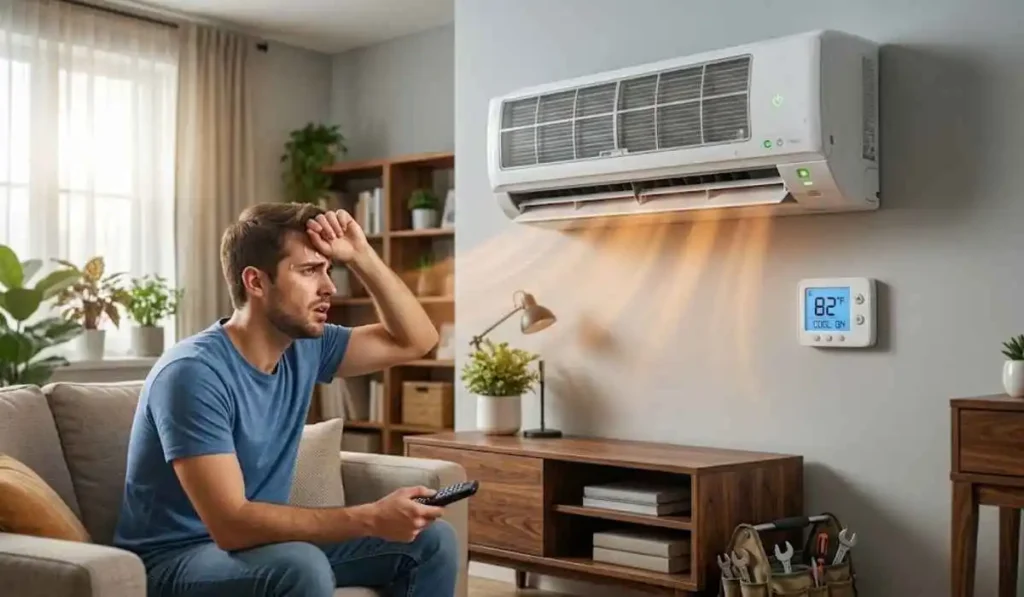
AC Running but Not Cooling: What Is the Problem? Home Blog AC Running but Not Cooling: What Is the Problem? You turn on the AC, hear the fan running, and expect the room to cool down. But hours later, the house still feels hot. It is one of the most confusing AC problems because the system appears to be working. Yet an AC can run normally while something inside the cooling system prevents it from producing or delivering enough cold air. An AC that runs but does not cool can have several causes, from a dirty air filter or blocked airflow to low refrigerant, a frozen evaporator coil, thermostat problems, or a dirty outdoor unit. Some issues are easy to check, while others need professional diagnosis. This guide explains the common causes, simple checks you can try, and when an AC repair is the safer choice. What Causes an AC to Run but Not Cool? If your AC is running but not cooling, the most common causes are a dirty air filter, blocked vents or ducts, a dirty outdoor condenser unit, low refrigerant, a frozen evaporator coil, or a faulty capacitor or compressor. The system may have power and still fail to cool because restricted airflow, refrigerant problems, or component failure prevents proper heat transfer from your home to the outdoors. What’s Actually Happening When Your AC Runs But Doesn’t Cool An air conditioner doesn’t actually create cold air it removes heat from inside your Dubai home and releases it outdoors. When airflow across the indoor evaporator coil is restricted, refrigerant is low, or the outdoor condenser cannot reject heat properly, that process breaks down. The AC may keep running for hours, yet the room barely gets cooler. In most cases, this is a heat transfer problem, not simply a power or thermostat issue. Common Causes of AC Running but Not Cooling Several faults can leave an AC running while its cooling performance drops. Here are the most common problems to check, starting with simple airflow and setting issues before moving to refrigerant or component faults. Dirty or Clogged Air Filter A dirty or clogged air filter is one of the most common reasons an AC runs but fails to cool properly. When the filter is packed with dust, it restricts airflow across the indoor evaporator coil, so the system cannot absorb enough heat from the room. The AC may keep running, but cooling becomes weak and energy use can rise. In Dubai, frequent dust exposure makes regular filter cleaning especially important. Incorrect Thermostat Setting Before assuming there is a mechanical fault, check the thermostat setting. If the system is set to “Fan” instead of “Cool,” the blower can run without the AC actively cooling the air. A temperature setting that is too high can also make the room feel warmer than expected. If your AC is not cooling because of the remote setting, switch to Cool mode, lower the set temperature, and allow the system time to respond. Blocked Vents or Registers Blocked vents or registers can prevent cooled air from reaching the rooms properly. Furniture, curtains, stored items, or accidentally closed vents may restrict the supply airflow, while blocked return vents can affect the system’s overall air circulation. The AC may sound like it is working normally, but some rooms remain warm or receive very little cool air. Check that supply and return openings are clear and unobstructed. Dirty Outdoor Condenser Unit Dubai’s dust and sand can build up on the outdoor condenser coil, making it harder for the unit to release the heat removed from your home. When that heat cannot escape efficiently, the AC loses cooling performance and may run for long periods without reaching the desired temperature. A visibly dirty condenser, restricted outdoor airflow, or an overheating outdoor unit can all point to this problem. Low Refrigerant from a Leak Low refrigerant is not normal and does not simply disappear from a properly sealed AC system. If the refrigerant level is low, there is usually a leak somewhere in the system that needs to be located and repaired. Insufficient refrigerant reduces the system’s ability to absorb indoor heat, causing weak cooling, longer run times, or warm air from the vents. Adding refrigerant without fixing the leak only treats the symptom. Frozen Evaporator Coil A frozen evaporator coil can severely restrict airflow and make an otherwise running AC stop cooling effectively. Ice buildup is usually a symptom rather than the root cause. Restricted airflow from a dirty filter or insufficient refrigerant can cause the coil to become too cold and freeze. If you notice ice around the indoor unit or refrigerant lines, the underlying airflow or refrigerant problem should be diagnosed rather than simply removing the ice. Failed Capacitor or Compressor Issue The outdoor fan may spin and make the AC appear to be running even when the compressor has failed to start. A faulty capacitor can prevent the compressor motor from starting correctly, while a compressor fault can stop the refrigeration cycle altogether. In either case, you may hear the system operating without getting genuine cooling. These electrical and compressor problems require proper testing to identify the failed component safely. Leaking or Damaged Ductwork Damaged or leaking ductwork can allow cooled air to escape before it reaches the rooms you are trying to cool. This is particularly noticeable in larger villas or older buildings where ducts, joints, and insulation may have deteriorated over time. The AC can run continuously while certain rooms remain warm because conditioned air is being lost inside ceilings, walls, or other spaces instead of reaching the supply vents. Causes and Fixes at a Glance Cause & Sign to Watch For Quick Fix Dirty or clogged filter — Weak airflow Replace or clean the air filter Incorrect thermostat setting — Air blows but isn’t cold Switch to Cool mode and lower the set temperature Blocked vents or registers — Uneven cooling Clear furniture, curtains, or other obstructions Dirty outdoor condenser —

Weak AC Airflow Causes and Solutions
Uncategorized

Weak AC Airflow: Causes and Solutions

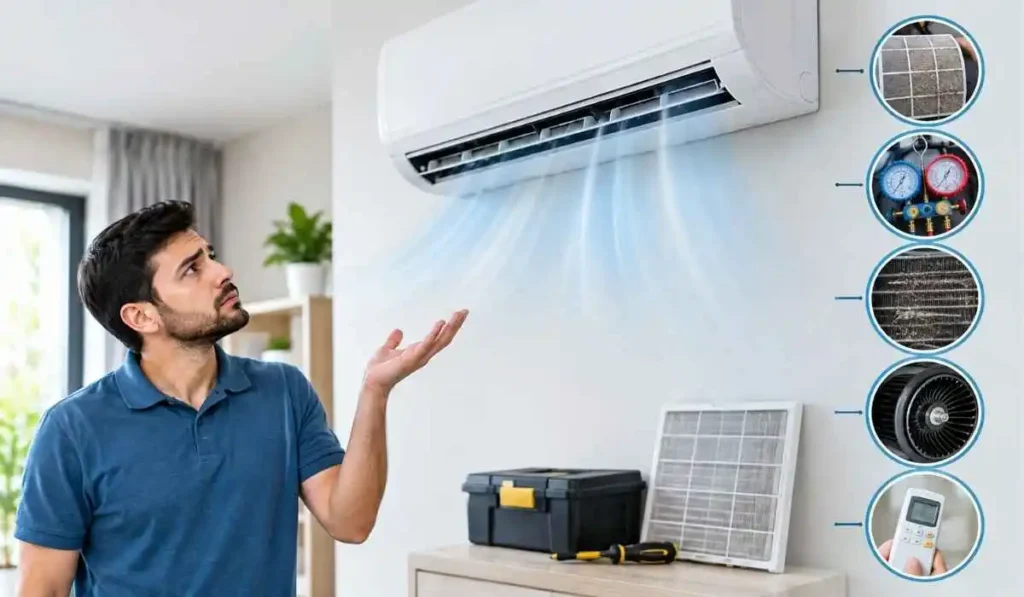
Weak AC Airflow: Causes and Solutions Home Blog Weak AC Airflow: Causes and Solutions An air conditioner can be running all day, yet your rooms still feel warm and uncomfortable. When the airflow from the vents becomes weak, cooling takes longer, some areas may stay hot, and your energy bills can start creeping up. It’s a frustrating problem, especially in Dubai’s heat, and it’s easy to overlook until the AC performance gets worse. The good news is that weak airflow doesn’t always mean you need a new AC. Bluebix Technical Services helps identify common problems such as dirty filters, blocked vents, duct issues, or blower problems. In this guide, we’ll cover the likely causes, simple fixes you can try, and when professional help is the safer choice. Common Reasons Your AC Airflow Is Weak Weak AC airflow is often caused by a dirty air filter, blocked vents, dirty evaporator coils, leaking ductwork, or a blower motor problem. An incorrectly sized AC system or ice forming on the evaporator coil can also restrict airflow. Checking these common issues can help identify the cause and restore better air circulation and cooling performance.  Signs You Have Weak AC Airflow Weak AC airflow is usually easy to notice once you know what to look for. In many homes, the AC may still be running and cooling, but the air reaching different rooms is not strong enough to maintain consistent comfort. Very little air coming from the AC vents Some rooms stay warmer than others Your AC runs longer than usual to cool the space Whistling sounds come from vents or near the air filter More dust collects around air registers and vents Energy bills increase without an obvious reason Common Causes of Weak AC Airflow Weak airflow can develop for several reasons, from a simple dirty filter to problems with ductwork or internal AC components. Here are the most common causes to check. Dirty or Clogged Air Filter A dirty or clogged air filter is one of the most common reasons for weak AC airflow. As dust, dirt, and other airborne particles build up, the filter becomes harder for air to pass through. This restricts airflow and makes the system work harder to circulate cool air. Regular filter cleaning or replacement can often improve airflow and overall AC performance. Blocked or Closed Vents and Registers Blocked vents and registers can prevent conditioned air from moving properly through your rooms. Furniture, curtains, rugs, or other objects placed over vents can restrict air circulation. Closed dampers or registers may also reduce airflow to certain areas. Checking that vents are open and free from obstructions can help improve air distribution and maintain more even room temperatures. Leaking or Damaged Ductwork In ducted AC systems, gaps, cracks, loose connections, or disconnected duct joints can allow cooled air to escape before it reaches the rooms where it is needed. This can result in weak airflow, uneven cooling, and longer AC running times. Damaged ductwork may also reduce system efficiency, so a professional inspection can help identify hidden leaks. Dirty Coils Dust and dirt can build up on the evaporator or condenser coils over time. When coils are dirty, the AC cannot exchange heat as efficiently, which affects cooling performance and may contribute to airflow problems. In Dubai’s dusty environment, coil cleaning is especially important as buildup can develop faster. Regular maintenance helps keep the system working efficiently. Failing Blower Motor The blower motor is responsible for pushing conditioned air through the AC system and into your rooms. If the motor is worn, has damaged bearings, or is operating at the wrong fan speed, less air may move through the system. Weak airflow from multiple vents can sometimes point to a blower or air handler issue that needs professional inspection. Ice on the Evaporator Coil Ice forming on the evaporator coil can significantly restrict airflow. In some cases, poor airflow causes the coil to become too cold and freeze. Once ice builds up, it blocks airflow even further, creating a repeating cycle that can worsen the problem. The underlying cause should be identified rather than simply melting the ice and restarting the AC. Incorrectly Sized AC System An incorrectly sized AC system can also create comfort and airflow problems. An oversized unit may cool the space too quickly and cycle off before air is properly circulated. An undersized system may run for long periods and still struggle to maintain comfortable temperatures. Proper AC sizing helps ensure balanced airflow, efficient cooling, and better long-term system performance. Causes and Fixes at a Glance Cause Sign to Watch For & Quick Fix Dirty or Clogged Air Filter Sign: Weak airflow throughout the home. Quick Fix: Clean or replace the air filter. Blocked or Closed Vents Sign: Uneven cooling between rooms. Quick Fix: Remove furniture, curtains, rugs, or other obstructions and check that vents are open. Leaking or Damaged Ductwork Sign: Cool air escapes before reaching certain rooms. Quick Fix: Arrange a professional ductwork inspection and repair any leaks. Dirty Coils Sign: Reduced cooling efficiency and weaker AC performance. Quick Fix: Have the evaporator and condenser coils professionally cleaned. Failing Blower Motor Sign: Unusual noises along with weak airflow from multiple vents. Quick Fix: Have the blower motor and fan system professionally inspected and repaired. Ice on the Evaporator Coil Sign: Visible frost or ice and noticeably reduced airflow. Quick Fix: Turn off the AC, allow the coil to thaw, then identify the underlying cause. Incorrectly Sized AC System Sign: Poor cooling or airflow problems since installation. Quick Fix: Get a professional load evaluation to confirm the correct system size. Does Weak Airflow Affect Your Energy Bills? Yes. When airflow is restricted, your AC may need to run longer to reach the temperature set on the thermostat. This increases energy use without necessarily making your rooms feel more comfortable. A simple issue, such as a dirty air filter, can make the system work harder than necessary, while cleaning or replacing it can help

Why Is My AC Freezing Up
Uncategorized

Why Is My AC Freezing Up?

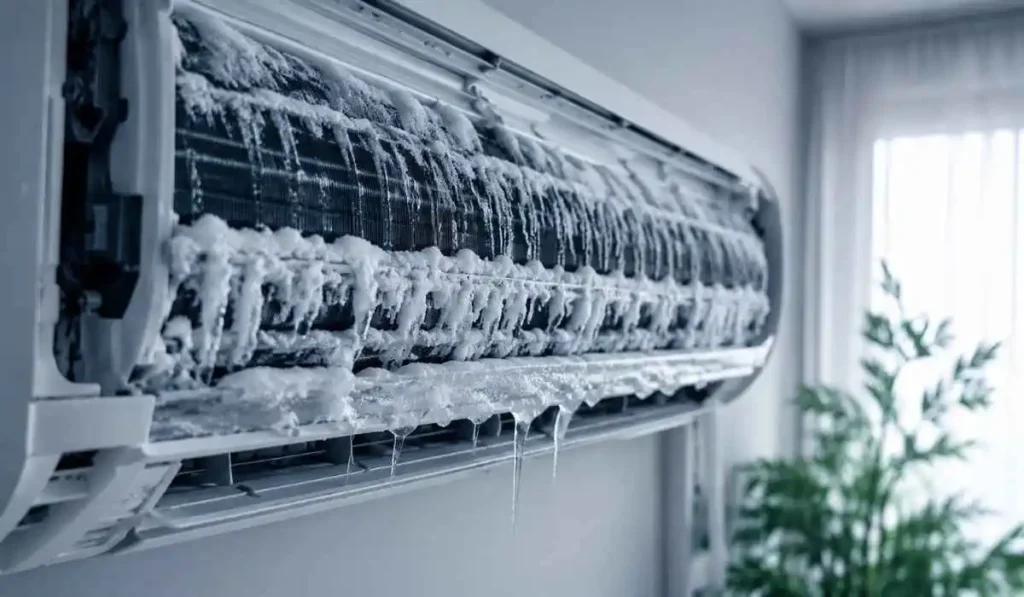
Why Is My AC Freezing Up? Home Blog Why Is My AC Freezing Up? It can be surprising to see ice on your AC during Dubai’s hot summer days. But if your air conditioner is freezing up, there is usually a reason behind it. You may notice frost or ice around the indoor unit, evaporator coil, or refrigerant lines. Your AC may also run for a long time while blowing warm air instead of cool air. In this guide, Bluebix Technical Services explains the common signs and causes of a frozen AC, including restricted airflow, a dirty air filter, low refrigerant, and coil problems. You’ll also learn what you can do to fix the issue and when to call an HVAC professional. What Causes an AC to Freeze Up? A frozen AC usually comes down to restricted airflow or low refrigerant. A dirty air filter, blocked vents, or a dirty evaporator coil can reduce airflow, while a refrigerant leak can make the coil too cold. A faulty blower fan or thermostat problem may also cause the system to freeze instead of cooling your home properly. Signs Your AC Has Frozen Up A frozen AC often gives you a few clear warning signs before the problem gets worse. You may notice less cool air coming from the vents, ice around the indoor unit or refrigerant lines, or water near the system as the built-up ice starts to melt. Weak or no cool airflow: The vents may blow very little air, or the air may feel warmer than usual. Frost or ice buildup: You may see frost or ice forming on the evaporator coil or refrigerant lines. Water pooling near the unit: Melted ice can leave water around the AC or air handler as the system thaws. How Does an AC Freeze in the First Place? Your AC’s evaporator coil needs a steady flow of warm indoor air to absorb heat properly. If airflow drops because of a dirty filter, blocked vent, or blower problem, the coil can become too cold. Low refrigerant can have a similar effect. When the coil temperature falls too low, moisture in the air freezes on its surface, creating frost and ice buildup. Common Causes of AC Freezing Up Several problems can make an air conditioner’s evaporator coil drop below the right temperature and start collecting ice. The most common causes involve poor airflow, refrigerant problems, dirty components, or controls that keep the system running longer than it should. Dirty or Clogged Air Filter A dirty or clogged air filter is one of the most common reasons an AC freezes up. When dust blocks the filter, less warm air can pass over the evaporator coil. Without enough airflow, the coil becomes too cold and moisture can freeze on its surface. Replacing the filter regularly is a simple way to maintain airflow and reduce the chance of ice buildup. Blocked Vents or Registers Blocked vents or registers can also reduce the airflow your AC needs to work properly. Furniture, curtains, closed vents, or accumulated debris may stop cool air from circulating through the room and warm air from returning to the system. This imbalance can cause the evaporator coil to get colder than it should, eventually leading to frost or ice buildup. Low Refrigerant from a Leak Low refrigerant is another common cause of a frozen AC, but refrigerant does not simply get used up during normal operation. If the level is low, there is usually a leak somewhere in the system. Reduced refrigerant can lower pressure and make the evaporator coil too cold, allowing moisture to freeze. Finding and repairing the leak requires a qualified HVAC professional rather than a DIY refrigerant refill. Dirty Evaporator Coil A dirty evaporator coil can interfere with normal heat absorption. Dust and grime build up on the coil and act like a layer of insulation, making it harder for the system to take heat from indoor air. As the coil becomes colder, moisture can freeze across its surface. Proper coil cleaning helps restore heat transfer, but heavy buildup is best handled during professional AC maintenance. Blower Fan Problems Your blower fan plays an important role in moving indoor air across the evaporator coil. If the blower motor is weak, damaged, or fails completely, there may not be enough airflow through the coil. The reduced air movement can make the coil temperature fall too low and cause freezing. A technician can check the blower motor, fan speed, and related components to find the airflow problem. Thermostat Set Too Low or Malfunctioning A thermostat set too low can make your AC run for long periods, especially when the system is already working hard in Dubai’s heat. A faulty thermostat may also keep the unit running when it should cycle off. During cooler nights, excessive cooling can contribute to coil freezing as well. This is one reason homeowners may wonder, “Why does my AC keep freezing up at night?” Causes and Fixes at a Glance Cause & Sign Quick Fix Dirty Filter — Weak airflow Replace the filter Blocked Vents — Uneven cooling Clear obstructions Low Refrigerant — Air blows but isn’t cold Call an HVAC professional Dirty Evaporator Coil — Reduced cooling Schedule professional cleaning Blower Fan Issue — Noise or weak airflow Call an HVAC professional Thermostat Issue — Freezing at night or after long runtimes Check settings/batteries or replace thermostat What to Do When Your AC Unit Freezes Up (Indoor and Outdoor) If you notice ice on your indoor or outdoor AC components, don’t try to force the system back into cooling mode. Follow these simple steps first: Turn AC Off: Switch the air conditioner off immediately to stop further ice buildup and reduce the risk of stressing the system. Use Fan Mode: Set the thermostat to fan-only mode. The moving air can help circulate indoor air and speed up the thawing process. Leave Ice Alone: Never touch, scrape, or chip ice from the evaporator coil or refrigerant lines. Sharp

Bluebix Technical Services provides best AC repair, installation, maintenance, cleaning, and HVAC services across Dubai with fast, professional support.

Contact

Address: 14C St - Al Quoz ind.fourth - Al Quoz - Dubai

Copyright © 2026 All Right Reserved BlueBix HVAC

Scroll to Top