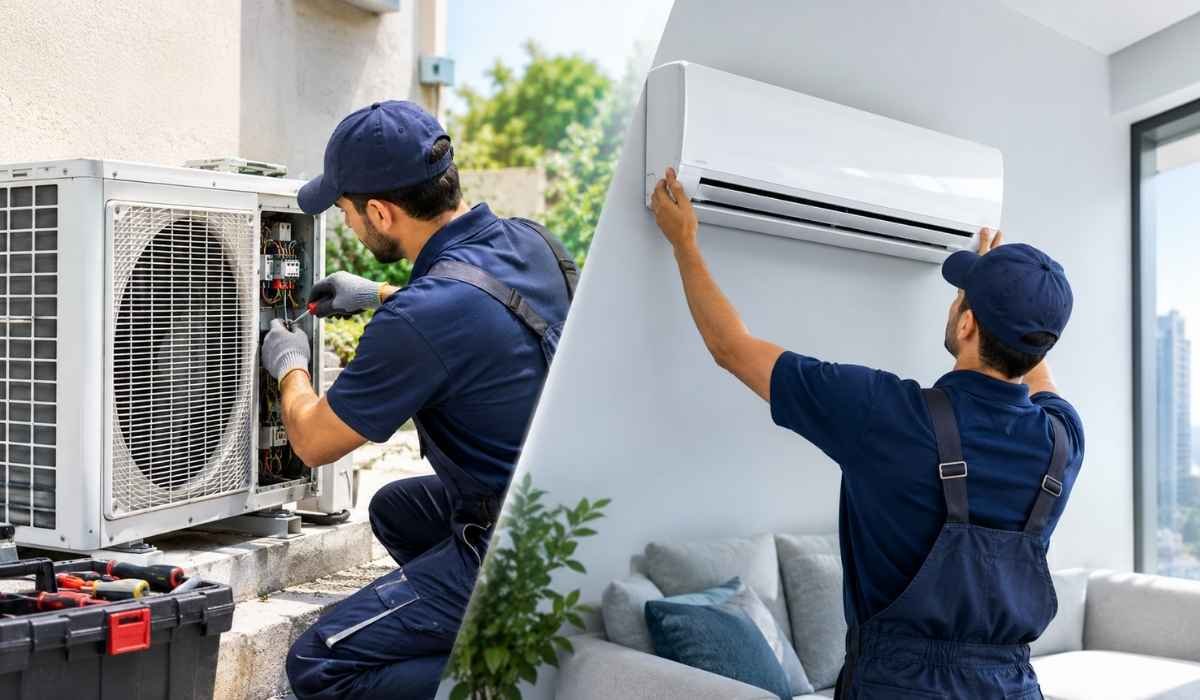
Every AC breakdown brings the same question: is this repair worth paying for, or is it time for a new unit? The answer depends on more than the latest repair bill. Your AC’s age, repair history, energy efficiency, cooling performance, and the condition of major components all matter. A small, affordable repair may make sense for a newer system, while frequent breakdowns or an aging, inefficient unit can make replacement more practical.
A simple cost check can help guide the decision: compare the repair cost with the price of replacing the system. This guide explains the key factors to consider, a practical cost rule, and the clear signs that replacing your AC may be the better choice.
If your AC is under 8 to 10 years old and the repair cost is reasonable, repairing it usually makes sense. Replacement may be more practical when the system is older, breakdowns are becoming frequent, or one major repair costs close to half the price of a new air conditioner. The right choice also depends on cooling performance, energy use, maintenance history, and the condition of the system.
A common HVAC rule of thumb is to consider replacement when a repair costs more than 50% of a comparable new AC system, especially when the existing unit is over 7 to 8 years old. It works as a quick gut-check because an aging air conditioner may need additional repairs soon, making repeated repair bills harder to justify. In Dubai, where AC systems work hard for much of the year, also consider cooling performance, energy use, maintenance history, and overall system condition.
If your AC is still relatively young and has been reliable, a repair can often be the practical choice. Look at the type of fault, maintenance history, and energy use before deciding that replacement is necessary.
Some AC problems can be fixed, but certain patterns point to a system that is no longer worth keeping. These are the key signs to consider before investing in another repair.
An AC that is 8 years or older has already handled years of Dubai heat, humidity, dust, and heavy cooling demand. Because systems often run for long hours here, components can wear faster than they would in milder climates. As the equipment ages, finding compatible replacement parts can also become more difficult. Age alone does not require replacement, but it becomes a stronger factor when combined with repeated repairs or declining performance.
If your AC needs a service call more than once or twice during a cooling season, the issue may be more than bad luck. Frequent repairs can indicate that several components are beginning to wear out. Adding up repeated repair bills can also make an aging system expensive to keep running. If breakdowns keep returning after repairs, it is worth comparing the cost of continued maintenance with the cost of installing a new AC system.
When an aging or struggling AC has to work harder to provide the same level of cooling, its energy consumption can increase. You may notice this through higher electricity bills even though your usage habits have not changed. Dirty coils, poor airflow, refrigerant problems, and other faults can also cause high energy use, so proper diagnosis matters. If the system is old and inefficient, upgrading to a modern inverter AC can reduce running costs while improving cooling control.
An incorrectly sized AC can create comfort problems even when the equipment itself is working. An undersized unit may run almost constantly without keeping up with Dubai’s heat. An oversized system can cool a room too quickly, shutting off before it properly removes humidity. The result can be rooms that feel clammy despite a low temperature. If the existing system was poorly sized from the start, replacement with a correctly sized unit may provide more consistent comfort and efficiency.
A failed compressor or major refrigerant leak can change the repair-versus-replacement decision, particularly when the AC is older and no longer covered by warranty. These repairs can be expensive, and putting substantial money into an aging system may not make financial sense if other components are also worn. A major failure does not automatically mean you need a new AC, but when the repair cost approaches that of a comparable replacement, replacement deserves serious consideration.
Factor | What It Suggests |
Age | Repair: Under 7–8 years old · Replace: Over 8–10 years old |
Repair Frequency | Repair: First repair in a while · Replace: Multiple repairs per cooling season |
Repair Cost | Repair: Under 50% of a new system’s cost · Replace: Over 50% |
Energy Bills | Repair: Stable energy use · Replace: Steadily rising bills |
System Sizing | Repair: Properly sized · Replace: Consistently undersized or oversized |
Dubai’s climate changes how you should look at AC age. Unlike milder regions where cooling is mostly seasonal, air conditioners here can run for long hours through much of the year. That sustained workload puts added strain on compressors, coils, fans, and electrical components. As a result, an AC’s “effective age” based on actual operating hours and wear can be higher than its calendar age suggests. Consider both when deciding whether another repair is worthwhile or replacement makes more sense.
BlueBix Technical Services helps Dubai customers make a practical AC decision based on the system’s condition, repair needs, and long-term value.
👉🏻Discover About More Blogs {How Do I Know if My AC Is Low on Gas?}
A typical AC unit can last around 10 to 15 years with proper installation and regular maintenance. In Dubai, heavy cooling demand and long operating hours can put extra stress on the system, which may shorten its effective lifespan.
It can be, depending on the repair cost, the condition of the system, and how often it has needed repairs recently. BlueBix Technical Services can assess the unit and help compare the cost of another repair with the value of replacing the system.
The cost of a new AC system in Dubai varies based on the system type, brand, cooling capacity, installation requirements, and other site conditions. A professional assessment and replacement quote from BlueBix Technical Services is the best way to determine the actual cost for your space.
Yes, particularly when an older, out-of-warranty AC has a major or recurring refrigerant leak. If the leak requires an expensive repair and the system already has other signs of wear, comparing the repair cost with a replacement can help you make a more practical decision.
It often can, especially when replacing an old, inefficient system with a modern inverter AC. Newer systems can adjust cooling output according to demand, which may reduce energy consumption while maintaining more consistent indoor comfort.
Replacing an aging AC before peak summer demand can be a practical choice. Planning ahead reduces the risk of losing cooling during extreme heat and may help you avoid the busier schedules that HVAC technicians often face when more systems start failing.
Choosing between AC repair and replacement usually comes down to three things: your unit’s age, how often it breaks down, and how the repair cost compares with investing in a new system. A professional inspection can also uncover efficiency problems or worn components that are easy to overlook. If you’re unsure which option makes sense, contact Bluebix Technical Services for an honest repair-or-replace evaluation in Dubai.

Bluebix Technical Services provides best AC repair, installation, maintenance, cleaning, and HVAC services across Dubai with fast, professional support.
Copyright © 2026 All Right Reserved BlueBix HVAC