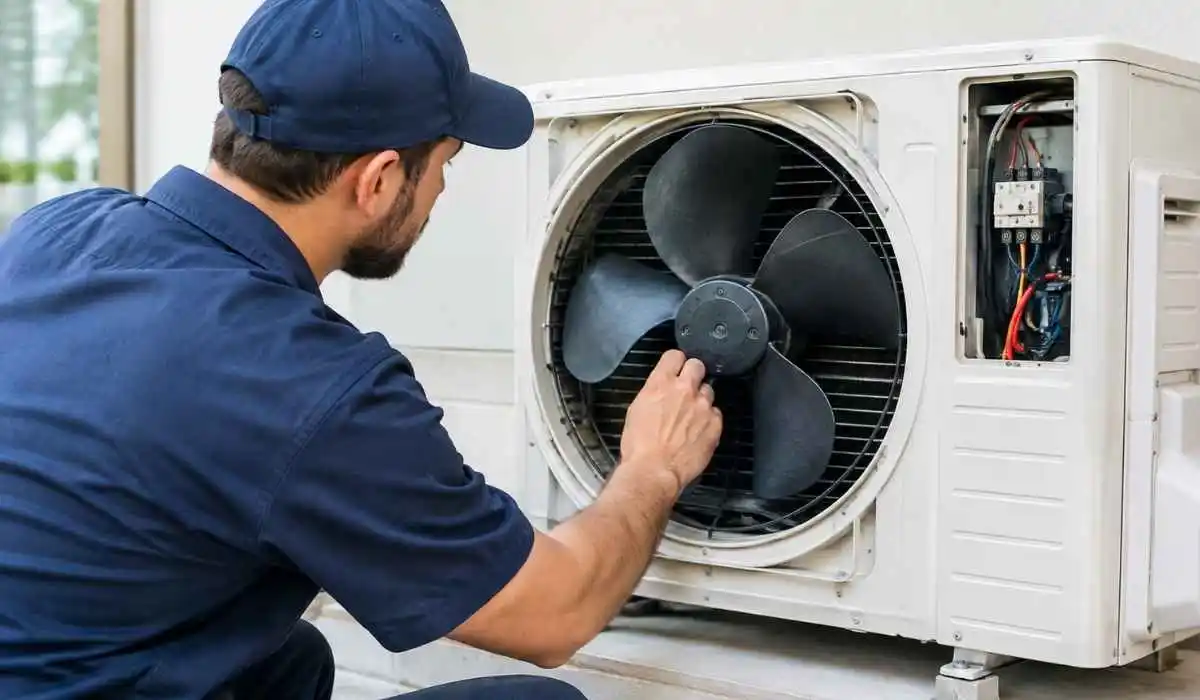
If your AC fan is not working or not spinning, the cause may be something simple like a thermostat setting or power issue, or a faulty component such as the capacitor, fan motor, or contactor. An air conditioner typically has two fans: the indoor blower fan moves cooled air through the vents, while the outdoor condenser fan helps release heat from the system. Identifying which fan has stopped working is the first step toward finding the right solution.
Common causes include a faulty thermostat, tripped circuit breaker, electrical problem, dirty air filter, restricted airflow, failed capacitor, damaged fan blades, fan motor failure, contactor problems, and a frozen evaporator coil. An outdoor fan that is not spinning can put extra stress on the compressor, while an indoor blower failure can cause little or no airflow from the vents.
An AC system uses different fans for different jobs. The indoor blower fan is located inside the air handler or indoor unit, while the outdoor condenser fan is located in the outdoor unit.
The indoor blower pulls warm indoor air across the evaporator coil, where heat is removed. It then pushes the cooled air through the ductwork and vents. If the blower stops, you may notice weak or no airflow even though the AC appears to be running.
The outdoor condenser fan moves air across the condenser coil to release heat carried by the refrigerant. This heat rejection helps the cooling cycle continue and allows the compressor to operate normally. If the outdoor fan stops spinning, heat can build up around the condenser and place additional stress on the compressor.
AC Fan | Main Job |
Indoor blower fan | Moves air across the evaporator coil and through the vents. A failure commonly causes weak or no airflow. |
Outdoor condenser fan | Moves air across the condenser coil to release heat. A failure can cause poor cooling and overheating. |
The first step is to identify whether the problem is with the indoor blower fan or outdoor condenser fan.
If the indoor AC fan is not working, you may notice weak or no air coming from the vents. Possible causes include a blower motor or capacitor problem, thermostat or control issue, dirty air filter, restricted airflow, or frozen evaporator coil.
If the AC sounds like it is running but very little air reaches the rooms, the blower or another airflow component may be involved. Avoid opening the indoor unit or testing electrical components yourself.
If the outdoor AC fan is not spinning, you may still have airflow from the indoor vents. You may also hear humming or notice the compressor running while the condenser fan remains still.
A failed capacitor, faulty fan motor, contactor problem, electrical fault, or physical obstruction can stop the outdoor fan. Because the condenser fan releases heat from the system, it is safer to switch the AC off if the compressor is running while the fan is stopped.
An AC fan can stop working because of a thermostat setting, power interruption, airflow restriction, mechanical failure, or electrical component problem. Symptoms can narrow down the possibilities, but professional testing may be needed to confirm the exact cause.
Before assuming there is a mechanical problem, check the thermostat. Make sure it is set to Cool and that the cooling temperature is below the current room temperature. Also check whether the fan is set to Auto or On.
With Fan Auto, the blower normally operates when the system is actively cooling. Fan On keeps the indoor blower running continuously. A programmed schedule, low battery, or blank thermostat display can also prevent normal operation.
Safe checks include:
A tripped circuit breaker, outdoor disconnect issue, or temporary power interruption can stop the AC fan. You can visually check an accessible breaker or disconnect, but do not open electrical panels or touch wiring.
If the breaker trips again after being reset, do not keep resetting it. Repeated trips can indicate a problem with the fan motor, capacitor, compressor, wiring, or another electrical component.
An AC run capacitor helps certain motors start and operate. When it becomes weak or fails, the condenser fan may struggle to start, run intermittently, or remain stationary while the outdoor unit hums.
Humming without fan movement can indicate a capacitor problem, but it can also occur with a failing motor or electrical fault. Capacitors can retain an electrical charge even after the system is turned off, so capacitor testing and replacement should be handled by a qualified HVAC technician.
A fan motor can fail because of wear, overheating, restricted airflow, electrical stress, or age. Warning signs include slow rotation, difficulty starting, intermittent operation, unusual noises, excessive heat, or complete failure.
A burning smell can also indicate a serious electrical or motor problem. Because symptoms can overlap, a technician should inspect the motor and related components before replacement.
A failing outdoor fan motor can also place additional stress on the compressor because the condenser cannot release heat properly.
A dirty air filter restricts airflow through the indoor system. Although a clogged filter does not automatically mean the blower motor has failed, restricted airflow can reduce cooling performance and contribute to a frozen evaporator coil.
Check the filter according to the manufacturer’s instructions and replace or clean it when necessary. If airflow remains weak after changing a dirty filter, the problem may involve the blower, ductwork, evaporator coil, or another component.
A frozen evaporator coil can make an AC appear to have a fan problem. Signs include ice on the coil or refrigerant lines, weak airflow, and poor cooling.
Possible causes include a dirty filter, restricted airflow, blower problems, or insufficient refrigerant caused by a possible leak. Low refrigerant is not the only possible cause.
If significant ice is present, turn off the cooling function and allow the system to defrost. The underlying cause should then be professionally diagnosed rather than simply adding refrigerant without finding the problem.
Leaves, dirt, plastic, branches, and other debris can block the outdoor fan. A bent or broken blade can also cause poor rotation, vibration, rattling, or grinding.
With the system powered off, you can visually inspect the area around the outdoor unit and remove loose debris that is clearly outside the equipment. Do not reach through the grille, force the blade, or attempt to repair a damaged blade.
A damaged blade can create imbalance and place additional stress on the condenser fan motor.
The outdoor fan depends on electrical components and control signals. A faulty contactor, damaged wiring, loose connection, or control problem can prevent the fan motor from receiving the required power.
The outdoor unit may remain inactive, click, operate intermittently, or show abnormal compressor and fan behavior. These symptoms can overlap with capacitor and motor problems, so electrical diagnosis should be performed by a qualified HVAC professional.
If the AC fan is not spinning but the compressor is running, the problem is usually related to the outdoor condenser fan or its electrical circuit. Possible causes include a failed capacitor, failing fan motor, faulty contactor, wiring problem, or physical obstruction.
The condenser fan releases heat from the refrigerant through the condenser coil. If it stops while the compressor continues operating, heat can build up and place additional stress on the compressor.
Common possibilities include:
If this happens, switch off the cooling system instead of allowing it to continue running. Do not open the electrical compartment or test capacitors, contactors, or live wiring yourself.
Start with simple observations before assuming a component has failed.
Avoid:
Capacitors can retain electrical charge, and electrical or refrigerant work requires specialized training and equipment.
Switch the AC off if you notice a burning smell, smoke, exposed wiring, sparks, repeated breaker trips, or severe electrical symptoms. Also shut down the system if the outdoor fan is not spinning while the compressor appears to be running.
A professional technician can determine whether the issue involves the thermostat, capacitor, fan motor, contactor, wiring, airflow,
Generally, no. If an AC fan is not working normally, it is best to turn the system off until the cause is identified.
Outdoor condenser fan stopped: The compressor may continue running while the condenser cannot release heat effectively. This can cause heat buildup and additional stress on the compressor.
Indoor blower fan stopped: Little or no air may come through the vents. Continued cooling can contribute to a frozen evaporator coil while providing little useful cooling.
A fan problem does not automatically mean the compressor will fail immediately, but continued operation can turn a smaller fan issue into a more expensive repair.
Certain symptoms indicate that professional diagnosis is appropriate:
Symptoms can suggest a cause but do not confirm the failed component. Professional inspection helps identify the actual problem before parts are replaced.
Regular AC maintenance can reduce strain on the blower, condenser fan, and other components.
Check the filter regularly and clean or replace it according to its condition and the manufacturer’s instructions. A clogged filter restricts airflow and can contribute to poor cooling and frozen coils.
Keep leaves, grass, dirt, plastic, and other debris away from the outdoor unit. Good airflow around the condenser helps the fan and coil release heat properly.
A qualified HVAC technician can inspect the fan motor, capacitor, electrical connections, coils, and overall airflow. This can help identify worn components before they result in complete fan failure.
New humming, rattling, grinding, buzzing, or repeated clicking should not be ignored. These sounds can indicate a developing motor, blade, mechanical, or electrical problem.
A seasonal HVAC inspection before periods of heavy cooling demand can help identify problems with airflow, coils, electrical components, and fan operation.
Good homeowner maintenance combined with professional servicing can help keep the AC operating reliably, although no maintenance plan can prevent every component failure.
When your AC fan stops working, replacing a part without finding the actual cause can lead to unnecessary costs and repeat problems. BlueBix Technical Services provides professional AC fan repair in Dubai with a focus on accurate diagnosis and practical repairs.
👉🏻Discover About More Blogs {AC Running but Not Cooling}
An AC fan can stop working because of incorrect thermostat settings, a tripped breaker, failed capacitor, faulty fan motor, restricted airflow, frozen evaporator coil, damaged fan blade, or an electrical control problem. The exact cause depends on whether the indoor blower or outdoor condenser fan has stopped.
The outdoor condenser fan may have a failed capacitor, fan motor, contactor, wiring problem, or another electrical fault. Turn the system off rather than allowing the compressor to continue running without proper condenser airflow.
It is generally best not to run the AC when the fan is not working. A stopped outdoor condenser fan can cause heat buildup and stress the compressor, while a failed indoor blower can cause poor airflow and contribute to a frozen evaporator coil.
A failed capacitor can cause humming without fan movement, slow starting, or intermittent operation, while a failing motor may cause slow rotation, unusual noises, overheating, or complete failure. Because symptoms overlap, a qualified HVAC technician should test the components.
Call an HVAC technician when the fan stops completely, repeatedly starts and stops, makes unusual noises, smells overheated, causes repeated breaker trips, or does not operate after safe thermostat and filter checks. Professional service is especially important for capacitor, motor, contactor, wiring, refrigerant, and other electrical problems.
An AC fan that stops working does not always mean the fan itself has failed. The cause may be the thermostat, power supply, restricted airflow, capacitor, fan motor, damaged blade, contactor, frozen coil, or another electrical component.
If the fan is not working, identify whether the indoor blower or outdoor condenser fan is affected. Simple checks may help, but BlueBix Technical Services can diagnose the underlying problem and provide the right AC fan repair in Dubai.

Bluebix Technical Services provides best AC repair, installation, maintenance, cleaning, and HVAC services across Dubai with fast, professional support.
Copyright © 2026 All Right Reserved BlueBix HVAC