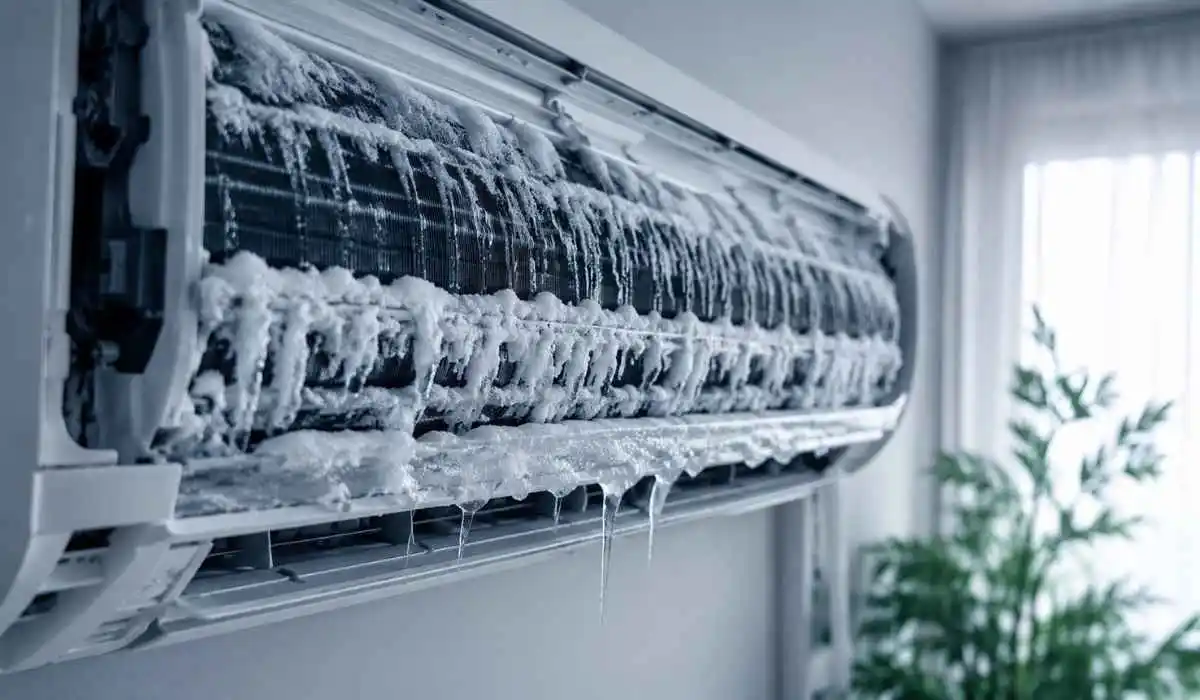
It can be surprising to see ice on your AC during Dubai’s hot summer days. But if your air conditioner is freezing up, there is usually a reason behind it. You may notice frost or ice around the indoor unit, evaporator coil, or refrigerant lines. Your AC may also run for a long time while blowing warm air instead of cool air.
In this guide, Bluebix Technical Services explains the common signs and causes of a frozen AC, including restricted airflow, a dirty air filter, low refrigerant, and coil problems. You’ll also learn what you can do to fix the issue and when to call an HVAC professional.
A frozen AC usually comes down to restricted airflow or low refrigerant. A dirty air filter, blocked vents, or a dirty evaporator coil can reduce airflow, while a refrigerant leak can make the coil too cold. A faulty blower fan or thermostat problem may also cause the system to freeze instead of cooling your home properly.
A frozen AC often gives you a few clear warning signs before the problem gets worse. You may notice less cool air coming from the vents, ice around the indoor unit or refrigerant lines, or water near the system as the built-up ice starts to melt.
Your AC’s evaporator coil needs a steady flow of warm indoor air to absorb heat properly. If airflow drops because of a dirty filter, blocked vent, or blower problem, the coil can become too cold. Low refrigerant can have a similar effect. When the coil temperature falls too low, moisture in the air freezes on its surface, creating frost and ice buildup.
Several problems can make an air conditioner’s evaporator coil drop below the right temperature and start collecting ice. The most common causes involve poor airflow, refrigerant problems, dirty components, or controls that keep the system running longer than it should.
A dirty or clogged air filter is one of the most common reasons an AC freezes up. When dust blocks the filter, less warm air can pass over the evaporator coil. Without enough airflow, the coil becomes too cold and moisture can freeze on its surface. Replacing the filter regularly is a simple way to maintain airflow and reduce the chance of ice buildup.
Blocked vents or registers can also reduce the airflow your AC needs to work properly. Furniture, curtains, closed vents, or accumulated debris may stop cool air from circulating through the room and warm air from returning to the system. This imbalance can cause the evaporator coil to get colder than it should, eventually leading to frost or ice buildup.
Low refrigerant is another common cause of a frozen AC, but refrigerant does not simply get used up during normal operation. If the level is low, there is usually a leak somewhere in the system. Reduced refrigerant can lower pressure and make the evaporator coil too cold, allowing moisture to freeze. Finding and repairing the leak requires a qualified HVAC professional rather than a DIY refrigerant refill.
A dirty evaporator coil can interfere with normal heat absorption. Dust and grime build up on the coil and act like a layer of insulation, making it harder for the system to take heat from indoor air. As the coil becomes colder, moisture can freeze across its surface. Proper coil cleaning helps restore heat transfer, but heavy buildup is best handled during professional AC maintenance.
Your blower fan plays an important role in moving indoor air across the evaporator coil. If the blower motor is weak, damaged, or fails completely, there may not be enough airflow through the coil. The reduced air movement can make the coil temperature fall too low and cause freezing. A technician can check the blower motor, fan speed, and related components to find the airflow problem.
A thermostat set too low can make your AC run for long periods, especially when the system is already working hard in Dubai’s heat. A faulty thermostat may also keep the unit running when it should cycle off. During cooler nights, excessive cooling can contribute to coil freezing as well. This is one reason homeowners may wonder, “Why does my AC keep freezing up at night?”
Cause & Sign | Quick Fix |
Dirty Filter — Weak airflow | Replace the filter |
Blocked Vents — Uneven cooling | Clear obstructions |
Low Refrigerant — Air blows but isn’t cold | Call an HVAC professional |
Dirty Evaporator Coil — Reduced cooling | Schedule professional cleaning |
Blower Fan Issue — Noise or weak airflow | Call an HVAC professional |
Thermostat Issue — Freezing at night or after long runtimes | Check settings/batteries or replace thermostat |
If you notice ice on your indoor or outdoor AC components, don’t try to force the system back into cooling mode. Follow these simple steps first:
Usually, an AC freezing up is a cause of poor cooling rather than the result of it. When ice forms on the evaporator coil, it restricts airflow and makes it harder for the system to move cool air through your home. The original problem may be low refrigerant, a dirty filter, or another airflow issue, while the growing ice buildup makes the cooling problem even worse.
If your AC starts freezing up, don’t keep running it and hope the ice clears on its own. A few simple checks can help protect the system and improve airflow while the frozen evaporator coil thaws.
Yes, the ice will eventually melt once you turn the AC off and let the system thaw. However, the underlying problem such as a dirty filter, low refrigerant, or restricted airflow won’t fix itself. If you restart the unit without addressing the cause, it may freeze again, reduce cooling performance, or put unnecessary strain on the compressor.
Your AC may freeze up at night because cooler outdoor temperatures and a thermostat set too low can make the evaporator coil drop below its normal operating range. The problem can become worse when airflow is already restricted by a dirty filter or blocked vents. Keep the thermostat at a reasonable overnight setting, and make sure air can move freely through the system to help prevent ice buildup.
Your AC may freeze up during or after rain because humid air contains more moisture. If airflow is already restricted by a dirty filter or blocked vents, that extra moisture can condense on the evaporator coil and freeze faster than usual. This can be more noticeable during Dubai’s humid season, when moisture levels rise and a struggling AC has a harder time maintaining proper airflow.
Your AC can freeze up during Dubai’s cooler winter evenings because lower outdoor temperatures change how hard the system needs to work. If you run the AC on very low thermostat settings for long periods, the evaporator coil can become colder than normal and drop below freezing. Keeping the temperature at a moderate setting can help maintain proper cooling and reduce the risk of ice buildup.
A frozen AC can sometimes be linked to a simple airflow problem, but repeated freezing often points to something deeper. If basic checks don’t solve the issue, it’s better to have the system inspected before continued use causes more damage or affects the compressor.
For same-day AC service in Dubai, contact Bluebix Technical Services and get your frozen AC checked by a professional.
When your AC keeps freezing up, you want a reliable team that can find the real cause and get your cooling system back to normal.
👉🏻Discover About More Blogs { AC Water Leakage: Causes and Fixes}
A frozen AC usually needs around 1–3 hours to thaw completely, depending on how much ice has built up. Turn off the cooling function and let the ice melt naturally before restarting the system.
No, it’s better not to run the AC in cooling mode while ice is still present. Letting the evaporator coil thaw fully helps prevent further ice buildup and reduces unnecessary strain on the system.
A frozen AC is not usually an emergency, but it should not be ignored. If the unit keeps freezing, stops cooling properly, or shows signs of a refrigerant leak, Bluebix Technical Services can inspect the system and identify the underlying problem.
Yes, continuing to operate an AC with low refrigerant can place extra stress on the compressor and other components. Since low refrigerant usually indicates a leak, professional inspection and repair can help prevent more serious damage.
The cost depends on what is causing the AC to freeze. A dirty filter may need a simple replacement, while problems such as a refrigerant leak, blower motor fault, or coil issue may require professional repair.
If the AC freezes again after replacing a dirty filter and checking the airflow, it’s time for professional help. Hissing sounds, suspected refrigerant leaks, weak airflow, or poor cooling after a full thaw are also good reasons to contact Bluebix Technical Services.
A freezing AC is usually a sign of restricted airflow or low refrigerant, although issues with the filter, evaporator coil, blower, or thermostat can also play a role. Some simple problems, such as a dirty filter or blocked vents, can be fixed at home. However, refrigerant leaks and other technical faults need professional attention. For same-day frozen AC diagnosis and repair in Dubai, contact Bluebix Technical Services.

Bluebix Technical Services provides best AC repair, installation, maintenance, cleaning, and HVAC services across Dubai with fast, professional support.
Copyright © 2026 All Right Reserved BlueBix HVAC