When an AC is running but your room is not getting as cool as it used to, low refrigerant may be one of the reasons. You may notice warm air, weaker cooling, longer running times, ice forming on the indoor coil or refrigerant lines, or a sudden rise in electricity use. AC gas, also known as refrigerant, should not normally run out on its own. If the level is low, there is often a refrigerant leak or another issue that needs to be checked.
If your AC is low on gas (refrigerant), you may notice warm or weak airflow, reduced cooling, ice forming on the evaporator coil or refrigerant lines, or the system turning on and off more often than usual (short cycling). Hissing or bubbling sounds can also point to a refrigerant leak. These signs can have other causes, so a qualified AC technician should inspect the system before adding refrigerant.
Refrigerant is the substance that makes your AC cooling possible. As warm indoor air passes over the evaporator coil, the refrigerant absorbs heat from that air and helps produce cooler air inside your Dubai home or office. The refrigerant then carries the absorbed heat to the outdoor condenser unit, where it is released outside. The fan mainly moves air through the system; it does not create cooling by itself. That is why the correct refrigerant level is important for efficient AC performance.
If your AC is low on gas (refrigerant), several changes in cooling performance can help you spot the problem early.
One of the first signs of low refrigerant is warm or noticeably weak air coming from the vents. This becomes especially obvious during Dubai’s peak summer heat, when the AC struggles to keep indoor spaces comfortable. You may also notice that some rooms cool less than others. However, weak airflow can have other causes, so the system should be properly diagnosed before assuming low gas is the problem.
Frost or ice on the evaporator coil or refrigerant lines is not normal and can be a sign of low refrigerant. When the system does not have the correct refrigerant charge, the coil temperature can drop too low and cause moisture to freeze. If you see ice, switch the AC off and arrange a professional inspection rather than continuing to run the unit.
An AC with low refrigerant may run normally but gradually lose its ability to cool the space. Your home or office may never reach the temperature set on the thermostat, with the hottest rooms often showing the problem first. As refrigerant levels continue to fall, cooling performance can decline across the entire property. A technician can check the system to confirm whether refrigerant loss is responsible.
Short cycling happens when your AC turns on and off more frequently than it normally should. Low refrigerant can affect the system’s ability to complete a proper cooling cycle, causing repeated starts and stops. This puts unnecessary strain on components and can increase energy use over time. If your AC is repeatedly cycling without maintaining the set temperature, professional diagnosis is recommended.
Unusual hissing or bubbling sounds can point to a refrigerant problem. A hissing noise may occur when refrigerant escapes through a small leak in a line, coil, or connection. Bubbling sounds can also indicate air or moisture entering a refrigerant circuit where it should not be. These sounds should not be ignored, as adding refrigerant without finding the source of the leak may only provide a temporary fix.
Sign & What It Means | What to Do |
Weak or Warm Airflow: Low refrigerant can reduce the AC’s ability to cool the air properly. | Schedule a professional AC check. |
Ice on Coil or Lines: Low refrigerant can cause the evaporator coil or refrigerant lines to become too cold and freeze. | Turn off the AC and call a technician. |
Reduced Cooling: The system may struggle to transfer heat and reach the thermostat setting. | Schedule a professional diagnostic. |
Short Cycling: Low refrigerant pressure can affect normal cooling cycles and put extra strain on the system. | Arrange a professional inspection. |
Hissing or Bubbling: These sounds can indicate refrigerant escaping from a leak or air entering the refrigerant circuit. | Call an AC professional promptly. |
Ignoring low AC gas can affect more than cooling performance. If the refrigerant problem continues, your system may work harder, use more electricity, and struggle to keep your Dubai home comfortable.
Low refrigerant usually means there is a leak somewhere in the AC system. Refrigerant does not get used up like fuel during normal operation, so a low level should not simply be topped up and ignored. A technician should locate and repair the leak before adding the correct refrigerant charge. Without fixing the source, a refrigerant refill is only a temporary solution, and the AC may lose cooling again.
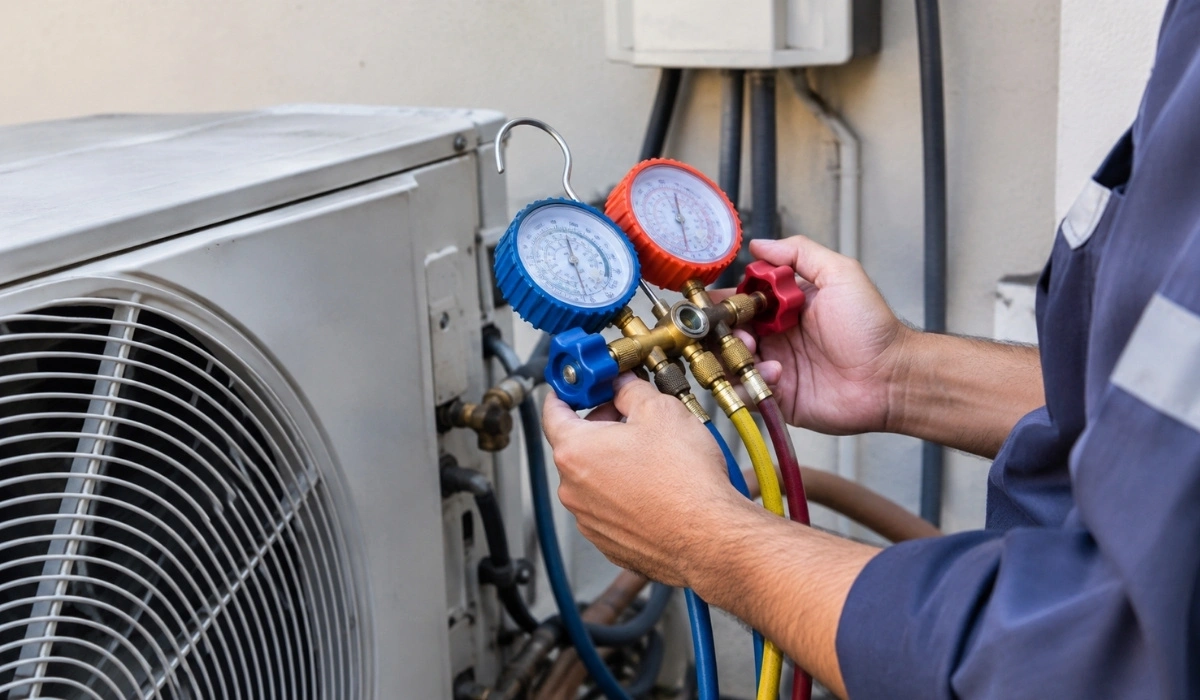
Professional technicians check AC refrigerant using a manifold gauge set connected to the system’s service valves. They compare the pressure readings with the correct target range for that specific AC unit. This requires specialized equipment, proper training, and safe refrigerant handling, so checking gas levels is not a safe or accurate DIY task. At home, you can watch for visible warning signs such as ice, weak cooling, or warm airflow, then call a qualified technician for an accurate refrigerant check.
No, homeowners should not try to fix low refrigerant themselves. Refrigerant handling requires proper certification, specialized equipment, and safe procedures. Simply adding more refrigerant without finding and repairing the underlying leak only masks the problem temporarily and may lead to further system damage. A licensed AC technician can check the refrigerant level, locate the leak, repair the cause, and recharge the system with the correct refrigerant safely.
If your AC continues showing signs of low refrigerant after basic checks, it is time to have the system professionally inspected. Prompt attention can help identify refrigerant leaks, protect the compressor, and prevent a small cooling issue from becoming a more costly AC repair.
For same-day AC service in Dubai, contact Bluebix Technical Services for professional diagnosis and repair.
When your AC has a refrigerant problem, proper diagnosis and safe handling matter more than simply adding gas.
👉🏻Discover About More Blogs { AC Fan Not Working: Common Causes}
Common signs include weak or warm airflow, reduced cooling, ice on the evaporator coil or refrigerant lines, short cycling, and hissing sounds. If these symptoms continue, Bluebix Technical Services can inspect the system and check whether low refrigerant or a leak is causing the problem.
An AC with low refrigerant may struggle to cool properly, remove indoor humidity, and reach the thermostat setting. The system may also run longer, use more electricity, and put additional strain on the compressor.
A 1.5-ton AC may typically require around 1 to 1.5 kg of refrigerant, but the exact charge depends on the specific system, refrigerant type, and manufacturer requirements. A Bluebix Technical Services technician should confirm the correct amount from the unit specifications rather than relying on a fixed quantity.
A professional technician checks refrigerant using a manifold gauge connected to the system’s service valves and compares the readings with the correct range for that unit. At home, you can watch for signs such as weak cooling, ice buildup, or warm airflow, but these symptoms alone cannot confirm the refrigerant level.
AC gas refill costs in Dubai vary depending on the refrigerant type, AC size, amount of refrigerant needed, and whether a leak needs to be repaired. Bluebix Technical Services can provide a more accurate cost after inspecting the system and identifying the cause of refrigerant loss.
Refrigerant does not normally run out during regular AC operation, so a system that needs repeated refills may have a refrigerant leak. Fixing the leak is important because simply adding gas can provide temporary cooling but will not solve the underlying problem.
Low refrigerant usually means there is a leak somewhere in the AC system, rather than the gas simply running out. Weak airflow, reduced cooling, ice on the coil or refrigerant lines, and hissing sounds can be early warning signs. Catching these symptoms early can help prevent further damage and higher repair costs. If you suspect low gas, contact Bluebix Technical Services for a professional refrigerant check and repair in Dubai.

Bluebix Technical Services provides best AC repair, installation, maintenance, cleaning, and HVAC services across Dubai with fast, professional support.
Copyright © 2026 All Right Reserved BlueBix HVAC