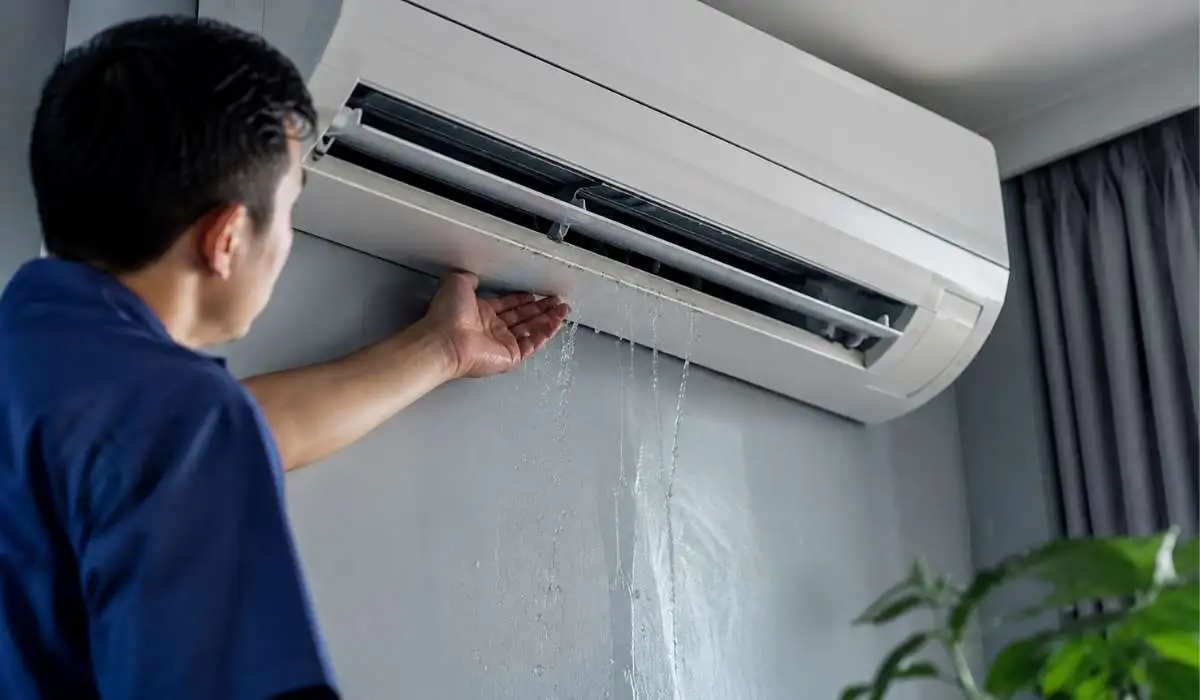
Water pooling around your AC unit is a common problem, but it is often ignored until it causes wall, ceiling, or floor damage. In Dubai, high humidity can increase condensation and put extra pressure on an air conditioner’s drainage system. A clogged condensate drain line, dirty air filter, frozen evaporator coil, damaged drain pan, or improper installation can all cause water to leak from an AC.
In this guide, we’ll explain the most common causes of AC water leakage by AC type, including central, window, wall-mounted, and ductless systems. You’ll also learn which AC leaks you can troubleshoot safely, what signs may indicate a serious problem, and when to call Bluebix Technical Services for professional AC inspection and repair.
An AC usually leaks water because of a clogged condensate drain line, dirty air filters, low refrigerant levels, a damaged drain pan, or improper installation. These problems can restrict airflow, freeze the evaporator coil, or prevent condensation from draining properly. The right AC water leakage solution depends on the cause, from cleaning the drain line or filter to repairing damaged components or correcting installation.
AC water leakage can start with a simple drainage issue or point to a deeper cooling-system problem. Here are the most common causes to check first.
A clogged condensate drain line is one of the most common reasons an AC starts leaking water indoors. Dust, dirt, algae, mold, and other debris can build up inside the drain pipe and block normal water flow. As condensation collects in the drain pan, it has nowhere to go, so the water backs up and eventually overflows around the indoor AC unit.
Dirty or clogged air filters can restrict the airflow moving through your air conditioner. When there isn’t enough warm air passing over the evaporator coil, the coil can become too cold and freeze. Once the ice melts, it may create more water than the drainage system can handle. Regular AC filter cleaning or replacement helps maintain proper airflow and reduces the risk of water leakage.
Low refrigerant levels can cause the evaporator coil to become unusually cold, leading to ice buildup. When that ice eventually melts, a large amount of water can enter the drain pan and overwhelm the drainage system. Low refrigerant may also indicate a refrigerant leak, so simply adding gas isn’t always the answer. A qualified HVAC technician should check the system, locate the issue, and perform a professional refrigerant recharge when needed.
The drain pan collects condensation from the evaporator coil before it flows through the condensate drain. Over time, corrosion, rust, cracks, or physical damage can leave the pan unable to hold water properly. Instead of reaching the drain pipe, water may escape underneath the indoor AC unit and damage nearby walls or ceilings. A damaged pan usually needs professional repair or replacement to restore proper drainage.
An incorrectly installed AC unit may not have the proper tilt or positioning needed for condensation to drain correctly. If the indoor unit is angled the wrong way, water can remain inside the pan instead of flowing toward the drain outlet. This problem is sometimes seen with DIY or budget installations. Correcting the unit’s position, drainage connection, or installation can prevent recurring AC water leakage.
The cause of an AC leak can vary depending on the system, so identifying the unit type helps narrow down the right fix quickly.
Split AC water leakage often starts at the indoor unit. A clogged drain line can stop condensation from flowing away, while dirty filters restrict airflow and may cause the evaporator coil to freeze. An incorrect indoor unit tilt can also prevent proper drainage. These issues are especially common in Dubai villas and apartments. Cleaning the filter and drain line may solve minor leaks, but persistent leakage should be checked by an HVAC professional.
Window AC water leakage is often linked to incorrect installation. The unit should have a slight outward tilt so condensation can drain outside rather than collect indoors. A clogged drain pan can also cause water to back up, while dirty coils or filters may contribute to excess condensation and poor airflow. Checking the installation angle, cleaning the drain pan, and keeping the coils and filter clean can help restore proper drainage.
Central AC water leakage can be caused by a clogged condensate line near the air handler, a frozen evaporator coil, or an overflowing or damaged drain pan. Because central systems have larger components and less accessible drainage points, finding the blockage or coil problem may require professional access. An HVAC technician can inspect the condensate system, check airflow and refrigerant levels, and repair the underlying issue before water damage spreads.
Cause | Unit Type & Quick Fix |
Clogged condensate drain line | All AC types: Clear the blockage using a wet/dry vacuum or suitable drain-cleaning method. |
Dirty air filter | All AC types: Clean or replace the filter to restore proper airflow. |
Low refrigerant levels | Split & Central AC: Have a qualified HVAC technician check for leaks and recharge the refrigerant. |
Damaged or rusty drain pan | Window & Central AC: Inspect the pan and replace it if cracked or badly corroded. |
Improper installation or tilt | Window & Split AC: Reinstall or adjust the unit to allow condensation to drain properly. |
A small amount of AC condensation is normal, but steady or unexplained water dripping shouldn’t be ignored. Ongoing AC water leakage can encourage mold and mildew, stain or damage walls and ceilings, and create electrical hazards if water reaches nearby wiring or electrical components. If the leak is persistent, increasing, or close to electrical connections, switch off the AC and arrange an inspection rather than waiting for the damage to spread.
If your indoor AC is dripping water, a few basic checks can help with minor drainage or airflow problems. Start with safety first, then work through these steps:
In a Dubai apartment, AC water leakage indoors can be caused by a blocked shared or central condensate drain line, especially where drainage access is limited in high-rise buildings. For rented apartments with split ACs, an incorrectly tilted indoor unit can also stop condensation from flowing into the drain properly. If water keeps appearing on your floor, wall, or ceiling, it’s best to have the drainage and unit installation checked before the problem worsens.
Some AC leaks are caused by a dirty filter or minor drain blockage, but not every problem is safe to handle yourself. If the leak keeps returning or you notice signs of a deeper cooling, drainage, or electrical issue, it’s better to stop troubleshooting and let a qualified HVAC technician inspect the system.
Need help today? Contact Bluebix Technical Services for same-day AC water leakage service across Dubai.
A little routine care can save you from dealing with dripping water, damaged walls, and unexpected AC repairs. These simple habits can keep your air conditioning system, condensate drainage, and airflow working properly especially during Dubai’s long cooling season.
When an AC starts leaking, you want the problem identified properly, not just a temporary fix that brings the water back a few days later.
👉🏻Discover More About Unique About { Why Is My AC Blowing Warm Air? }
The most common causes include a clogged condensate drain line, dirty air filters, low refrigerant, a damaged drain pan, or incorrect AC installation. Bluebix Technical Services can inspect the system to find the actual cause instead of simply treating the visible leak.
A small amount of condensation is normal, but continuous dripping isn’t something to ignore. It can lead to mold, damaged walls or ceilings, and potentially electrical problems if water reaches nearby wiring or components.
Start by switching off the AC, then check the air filter and condensate drain for obvious blockages. If cleaning doesn’t stop the leak, Bluebix Technical Services can inspect the drain line, evaporator coil, drain pan, and refrigerant system.
A split AC may leak because its indoor drain line is clogged, the filter is dirty, or the unit isn’t positioned with the correct tilt. In Dubai apartments and villas, these drainage and airflow issues are fairly common and should be addressed before they cause water damage.
It’s better to switch the AC off until you know what’s causing the leak, particularly if water is near electrical wiring. A minor drain blockage may be simple to fix, but continuing to run a leaking system can make the problem worse.
Cleaning the condensate drain line every few months is a sensible routine, especially during heavy AC use. Regular professional maintenance can also catch buildup, drain blockages, frozen coils, and other issues before they result in water leakage.
Most AC water leaks are caused by simple issues such as a clogged condensate drain line or dirty air filter, but not every leak is a quick DIY fix. Low refrigerant, frozen evaporator coils, or a damaged drain pan may require professional attention to prevent further water damage. If your AC is leaking in Dubai, contact Bluebix Technical Services for same-day AC leak diagnosis and reliable repair.

Bluebix Technical Services provides best AC repair, installation, maintenance, cleaning, and HVAC services across Dubai with fast, professional support.
Copyright © 2026 All Right Reserved BlueBix HVAC